Enhancing Immunization Efficiency Through Shared Digital Innovation
Harnessing India’s Public Health Technologies to Strengthen Vaccine Delivery Systems Across the Global South
Challenges
Universal immunization is one of the most cost-effective public health strategies. Yet, many countries in the Global South struggle with fragmented vaccine supply chains, inadequate cold chain monitoring, and limited data visibility—especially at the last mile. These systemic inefficiencies often result in vaccine wastage, stockouts, and delays, disproportionately affecting underserved populations. In 2013, India’s own national Effective Vaccine Management (EVM) assessment revealed critical gaps in logistics, cold chain monitoring, and vaccine stock tracking, with performance indicators well below global standards. Fragmented desktop-based systems limited visibility and usability, particularly for field workers. These findings catalyzed India’s Ministry of Health and Family Welfare to develop and deploy eVIN—a digital, real-time vaccine logistics management system. Over time, eVIN evolved into a larger digital health ecosystem, influencing similar initiatives globally. This good practice addresses the broader challenge of inefficient vaccine supply chains in low- and middle-income countries and advances efforts toward achieving SDG 3.
Towards a Solution
To overcome systemic inefficiencies in vaccine delivery, India launched the electronic Vaccine Intelligence Network (eVIN) in 2015, in partnership with UNDP. Initially piloted in two states, eVIN used mobile and cloud-based technologies to enable real-time tracking of vaccine stocks and cold chain temperatures across public health facilities. It addressed three critical challenges: locating vaccine stocks, ensuring adequate quantities, and maintaining proper storage conditions.
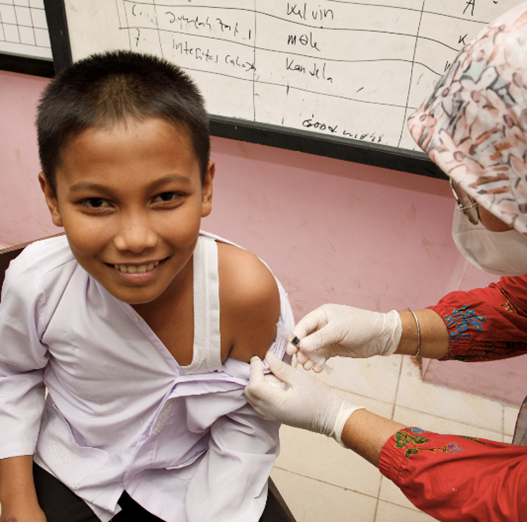
By 2018, the Government of India scaled eVIN to 12 states, saving over 90 million vaccine doses and achieving a Return on Investment (ROI) of 2.91. Encouraged by its success, eVIN expanded to 30,000+ health facilities, with 50,000+ health workers trained. Building on this, the CoWIN platform was launched during the COVID-19 pandemic to register over 1 billion beneficiaries and digitally track the administration of 2.2 billion doses. This was later expanded into U-WIN, which now supports the routine immunization of over 45 million pregnant women and children, training over 250,000 vaccinators and 800,000 ASHAs.
The participatory nature of this digital transformation was a hallmark of its success. MoHFW led the policy design, while UNDP provided end-to-end technical support—from system design to frontline worker training. These platforms have catalyzed a shift toward real-time decision-making, data-driven planning, and inclusive service delivery.
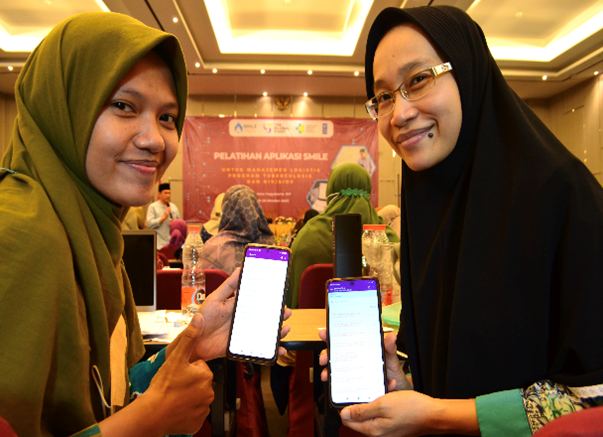
India’s successful implementation set the stage for South-South knowledge sharing. Countries like Indonesia, Malawi, Sudan, and Afghanistan partnered with UNDP and Indian counterparts to adapt and scale the model. In Indonesia, eVIN was localized as SMILE in 2018. UNDP India and the Indonesia Country Office jointly facilitated pre-implementation assessments, system localization, stakeholder training, and rollout. Today, SMILE supports 12,000 health facilities, managing over 500,000 monthly immunizations.
In Malawi, eVIN and CoWIN-based systems improved stock visibility, reduced wastage, and streamlined appointment scheduling. Sudan adopted a similar system to strengthen vaccine delivery through improved cold chain monitoring. Despite its complex environment, Afghanistan utilized CoWIN principles to improve COVID-19 vaccination coordination, boosting coverage and effectiveness.
This digital public health approach is scalable, context-adaptable, and designed as a Digital Public Good (DPG). Its innovation lies not just in technology but in its human-centric design and participatory implementation. The success of these platforms has spurred interest in adapting digital systems for TB control (TB-WIN), animal vaccination (A-VIN), and zoonotic diseases (Zoo-WIN), broadening their impact.
The initiative\\\'s sustainability is rooted in government ownership, trained personnel, and institutional embedding. India’s leadership, supported by UNDP and the Ministry of External Affairs, ensures continuity. Moreover, these models have influenced health policy dialogues and digital health strategies globally.
The initiative provides strong replication potential. Core success factors include stakeholder alignment, localized system design, trained personnel, and a robust digital infrastructure. Countries with political commitment and basic health infrastructure can successfully replicate this model to improve public health outcomes.
Lessons learned include the importance of pilot-based scaling, training at all administrative levels, and strong inter-ministerial coordination. Tailoring the approach to local health delivery contexts and investing in user-friendly interfaces for health workers have been key success factors.




Contact Information
Name – Abhimanyu Saxena Title- Health Portfolio, UNDP India Country Lead Organization- UNDP India
Countries involved
Afghanistan, Indonesia, Malawi, Sudan
Nominated By
United Nations Development Programme (UNDP) India
Supported By
Ministry of Health and Family Welfare, Government of India, GAVI, The Vaccine Alliance.
Implementing Entities
UNDP
Project Status
Completed
Project Period
4/2018 - 4/2023
Sectors
Health, Development Cooperation, Capacity Building, Digital Transformation
Primary SDG
03 - Good Health and Well-being
Secondary SDGs
09 - Industry, Innovation and Infrastructure
Similar Solutions