
On September 24, 2025, the United Nations Office for South-South Cooperation (UNOSSC) and the NYU Center for Global Affairs (CGA) jointly hosted a university-wide event at NYU, titled “Reimagining Cooperation in a Time of Global Change: South-South Futures at UNGA 2025.”
Held alongside the 2025 United Nations General Assembly, the event engaged the NYU students and faculty on how the Global South is reshaping international cooperation. The event featured distinguished speakers – Dr. Adel Abdellatif, Lead Author of the 2025 UNOSSC’s Global Report on South-South and Triangular Cooperation,
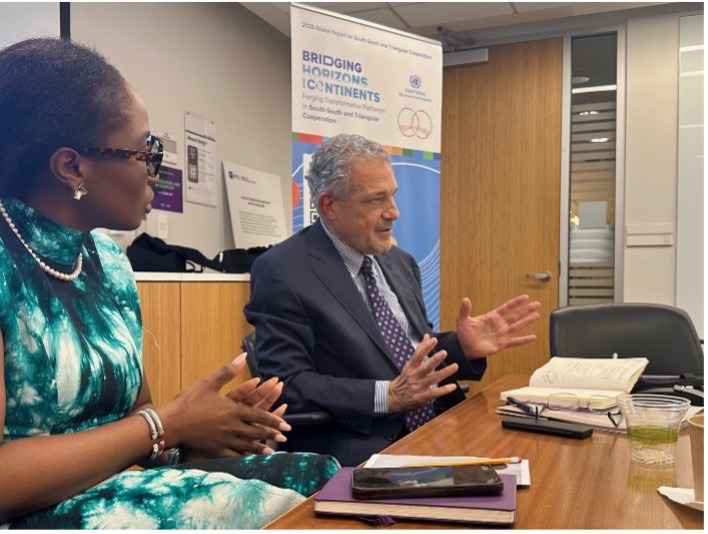
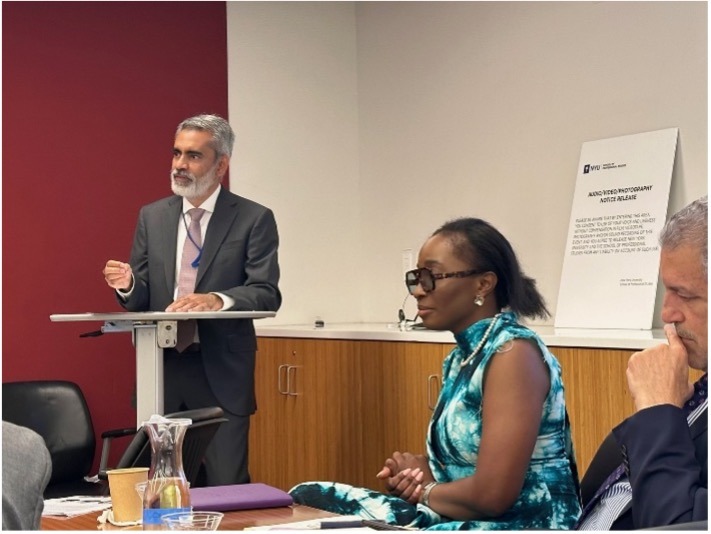
Zanofer Ismalebbe, Chief of Knowledge Management at UNOSSC, and Dr. Carolyn Kissane, Clinical Professor and Associate Dean at NYU’s Center for Global Affairs. The discussion was moderated by Dr. Olajumoke Ayandele, Clinical Assistant Professor at NYU’s Center for Global Affairs, who guided the exchange and engaged the audience in a dynamic conversation.
Central to the event was the newly released 2025 UNOSSC Global Report on South-South and Triangular Cooperation: Bridging Horizons and Continents – Forging Transformative Pathways in South-South and Triangular Cooperation.
Issued amid historic anniversaries and profound global transitions, the Report calls for rethinking collaborative models to address climate change, digital transformation, shifting geopolitics, and youth-led innovation. Beyond presenting findings, the event created space for an interactive dialogue—encouraging participants to consider how lessons from South-South cooperation can shape emerging futures worldwide.
The conversation outlined how South-South and triangular cooperation is already shaping outcomes at global and regional levels, then moved into practical frontiers:
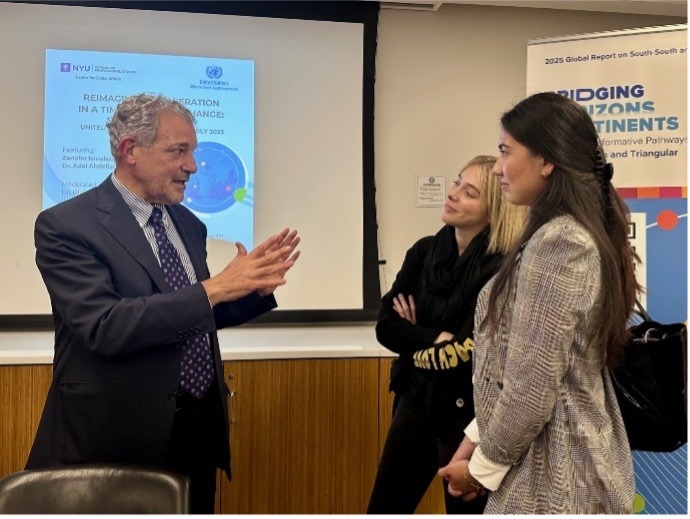
taking stock of the past, present, and future of South-South and triangular cooperation; the imperative of engaging youth, academia, private sector and other stakeholders; shifts in global trade and investments; and cross-sector trends spanning digital transformation, urban development, demographics, and emerging technologies—including AI and its applications. Participants also explored how universities and cities can accelerate climate adaptation and mitigation, how partnerships can expand access to climate finance, and how digital public goods—from interoperable digital ID and payments to data-sharing protocols—can drive inclusion while safeguarding privacy across diverse regulatory contexts.
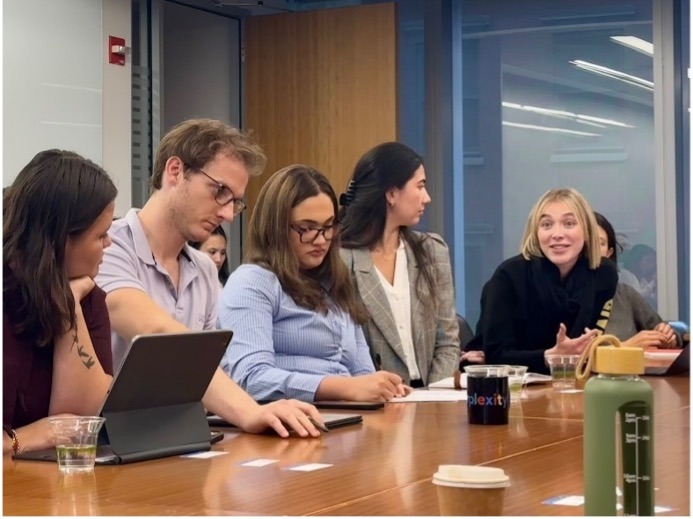
The students engaged actively and unpacked geoeconomic opportunities such as value-chain upgrading, the role of regional funds and blended finance, and the governance safeguards needed to sustain credibility. Youth, diaspora networks, and digital entrepreneurship emerged as powerful multipliers—linking talent exchanges, venture creation, and knowledge partnerships to real-world impact. The students also exchanged views on implementation pathways and the implications of shifting multilateral funding patterns for development outcomes across the Global South.
The Global Report goes beyond analysis to offer foresight-based, implementation-oriented pathways, positioning South-South and triangular cooperation at the heart of practical problem-solving and multilateral renewal. This event marked the first presentation and discussion of the Global Report with students and faculty at a university—an important step toward popularizing the Report’s findings and recommendations with academic audiences.
In his remarks, Zanofer Ismalebbe, Chief of Knowledge Management at UNOSSC, emphasized the novelty of the Global Report and invited NYU to partner in upcoming knowledge and research initiatives of the UNOSSC, especially the South-South Global Thinkers Initiative. He also underscored that the Report is not just descriptive but offers a strategic roadmap for implementation, and that engaging young researchers and universities like NYU is essential to ensure South-South and triangular cooperation remains innovative, future-oriented, and transformative.
UNOSSC extends sincere appreciation to NYU students and faculty for the collaboration and for hosting this timely and thought-provoking exchange.
Access the full Global Report 2025 – Global Report on South-South and Triangular Cooperation – South-South Galaxy
Access the Background Paper on Youth perceptions of South-South and triangular cooperation: Realities and prospects.