Dutch-Sino-East Africa Bamboo Development Programme: Phase II
Working to transfer knowledge, technologies and policy experiences from Europe and Asia to help develop the bamboo sector in Ethiopia, Kenya and Uganda.


Challenges
Read about Phase I of the project, which ran from October 2016 to December 2019.
East African countries are home to abundant bamboo resources, but the plant’s full potential for poverty alleviation, job creation and environmental protection has not yet been fully realized. Major obstacles for tapping into the resource include supply chain bottlenecks, small-scale production, low product quality, limited operational, technical, research and innovation capacity at all levels, inadequate institutional governance mechanisms and insufficient capacity to adhere to international standards. Connecting beneficiary countries to regional and international markets can drive green economic development in East Africa while also enhancing livelihood opportunities, food security and environmental management.
Bamboo is a fast-growing, renewable resource that is easy to plant, manage, harvest and utilize for diverse value addition. Its strong-but-flexible nature makes it an ideal material for a range of products, including food (shoots), construction material, furniture, pulp and paper, packaging, flooring, daily use products, toothpicks, barbeque skewers and more. Bamboo products can also replace many single-use plastics, making it a powerful tool for fighting plastic pollution. As a versatile nature-based solution, bamboo also plays a vital role in sequestering carbon, restoring degraded land and building disaster-resilient construction, strengthening climate change mitigation and adaptation efforts. With a total output value in excess of USD 70 billion and trade value of USD 3.6 billion, the global bamboo industry demonstrates the immense potential of the plant to be part of countries’ economic and environmental policies.
Towards a Solution
The Dutch-Sino-East Africa Bamboo Development Programme has leveraged South-South and triangular cooperation to apply the experiences and lessons learned from the transformation of Asia and Europe’s bamboo markets to East Africa, allowing Ethiopia, Kenya and Uganda to participate in and benefit from the new bamboo economy of the 21st century. The main goal of the programme has been to enhance climate change mitigation and adaptation benefits by developing inclusive and sustainable industrial and small and medium-sized enterprise (SME) bamboo value chains, resulting in better livelihood opportunities, food security and environmental management in East Africa. The main pathways for achieving this goal include strengthening pro-poor industries and SME development, sustainably managing bamboo resources and fostering an enabling business environment. The programme is implemented by the International Network for Bamboo and Rattan (INBAR), with support from China, the Netherlands and local stakeholders.
Phase II of the programme lasted from April 2020 to June 2024. During this period, INBAR along with local partners, facilitated users and producers in the region to harness bamboo resources to generate sustainable employment and income, restore degraded lands and combat climate change. In particular, the programme supported the establishment and sustainable management of plantations, skills development, identification of highly marketable products, enhanced value addition, connection to competitive markets and the development of certification and standards. These comprehensive efforts delivered impressive results to project beneficiaries.
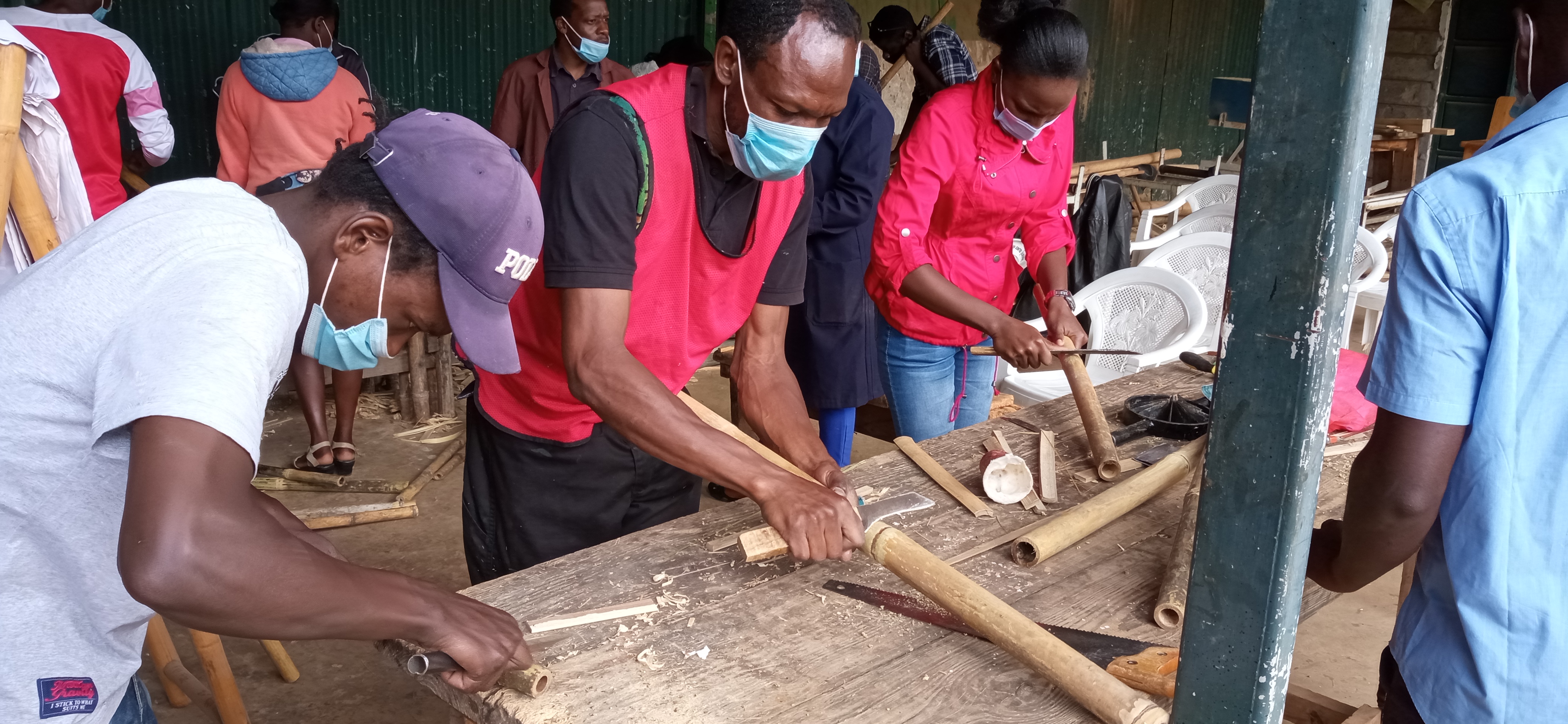
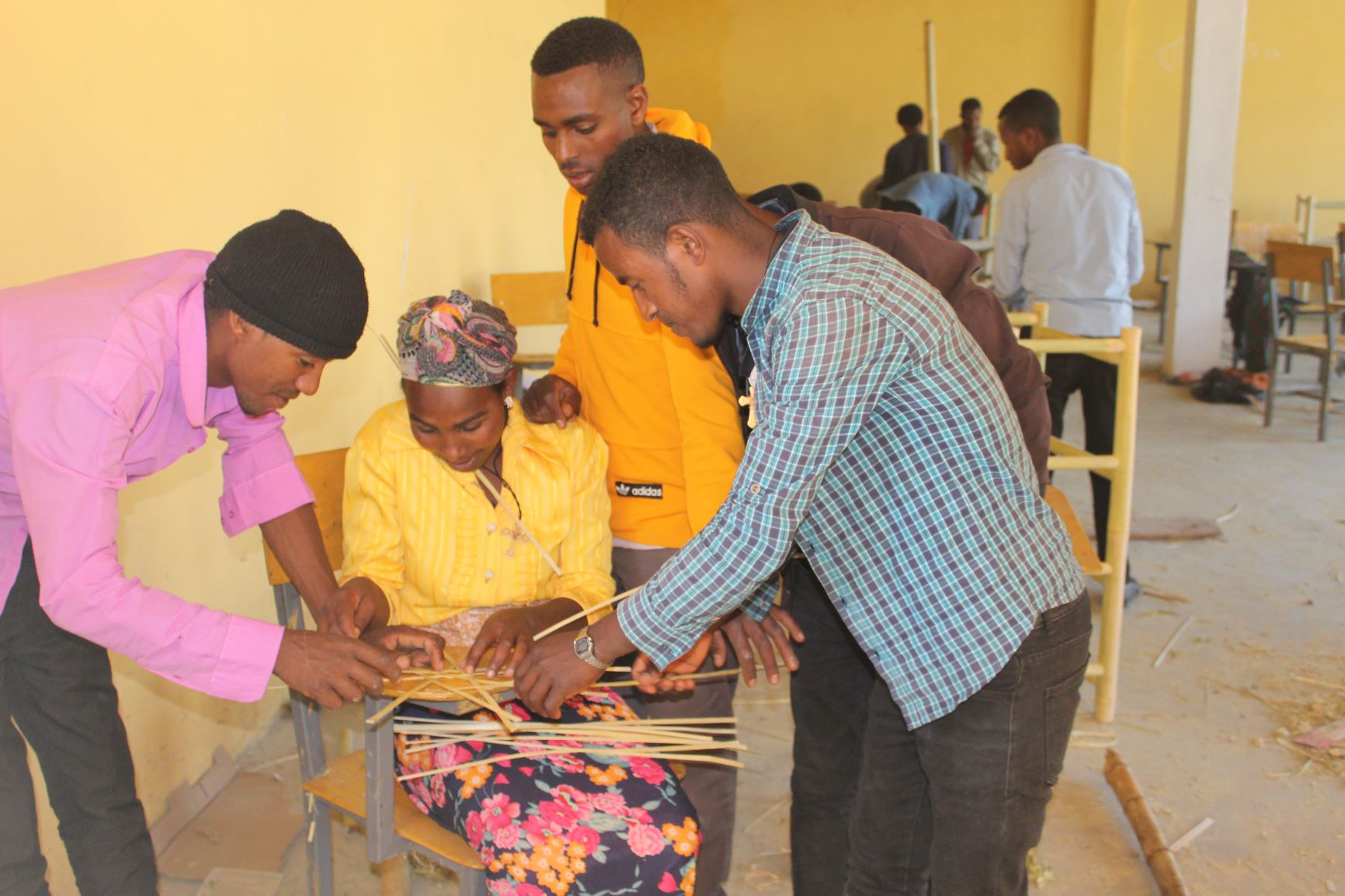
Capacity building is an important way to equip stakeholders with the necessary skills to develop new bamboo enterprises. Overall, the programme conducted over 150 technical skills trainings on value addition, with 5500 participants benefiting from training on new processing and technologies for diversification of bamboo SME value chains and specialization of industrial bamboo value chains. In addition, 10 common production and training centers (CPTC) were provided with machinery and technical support that provide direct employment to over 1000 beneficiaries. Moreover, 5100 women were trained on bamboo charcoal and improved cooking stoves linked to three charcoal briquetting enterprises, putting cash directly into the pockets of rural women while also providing a cheaper source of fuel and avoiding the need to gather fuelwood from forests. These intensive efforts built the capacity of stakeholders and promoted the key role of women in different bamboo value chains to strengthen livelihoods.
These efforts were reinforced with basic research aligned with project objectives, which included conducting three site-specific matching studies, developing five tissue culture protocols for bamboo species and testing age-wise properties and product compatibility for three bamboo species. This research supports on-the-ground activities by helping farmers and entrepreneurs choose the right species for cultivation and identifying the suitable applications for bamboo varieties.
INBAR also worked closely with partners across the region to support nurseries, boost production and distribute bamboo plants. In total, 9.8 million bamboo plants were produced from 36 large-scale and 100 micro-nurseries supported by the programme, significantly bolstering the overall resilience and efficiency of the fledgling bamboo industries across the three East African countries. These nursery-based activities particularly benefited women and youth. In terms of land management, 5028 hectares of new plantations were established on degraded lands, lake shores and river banks, along with over 5000 hectares of bamboo forests and farms also brought under sustainable harvesting and management regimes. Bamboo restoration and sustainable management have improved the climate resilience of 14,964 beneficiaries. A total of 7941 smallholder farmers, extension workers and line department officials were capacitated on bamboo resource development, which aimed to trigger knowledge cascades among targeted communities. These actions have generated positive impacts in terms of climate change mitigation and resilience for thousands of beneficiaries, contributing to landscape restoration and carbon sequestration.
The programme supported the development of six multi-product supply chains, local market infrastructure and 31 cooperatives through various activities. This has provided jobs and income to 3118 youth and women through supplying commoditized products to SMEs and industries. By supporting working groups and technical committees within national standards agencies, 29 national standards were developed for the three countries, which are critical elements for fostering an enabling business environment. Furthermore, the programme contributed to the development of the Ethiopian Interim National Standard approved by the Forest Stewardship Council Policy Steering Group for the certification of 1000 bamboo forests in Kaffa, Southwest Region of Ethiopia.
In terms of raising awareness, the programme participated in international, regional and domestic trade fairs, championing the benefits of bamboo to different audiences, while also hosting dozens of workshops for banks, regional stakeholders, farmers, consumers and policymakers. Two investor study and cross country study tours were organized to encourage new financial investment in the bamboo sector in the beneficiary countries. These tours aided in sharing experiences and best practices and also highlighting the potential business opportunities in the region. The Ethiopian Investment Commission and Uganda Investment Authority both now identify bamboo as a potential sector in their investment planning in part due to the programme’s targeted awareness-raising efforts.
Multi-stakeholder platforms facilitate communication and partnership between a diverse range of institutions, organizations and individuals. Dedicated bamboo offices hosted in the three beneficiary countries’ government structures have been supported and/or established, including a Bamboo Directorate in the Ethiopian Forestry Development, a Bamboo Unit at the Kenya Forestry Research Institute, and a Bamboo Unit at Uganda’s National Forestry Office. These units are linked to bamboo cooperatives and associations, disseminating related knowledge and fostering dialogues with line departments involved with the bamboo sector. These official units in government and cross-learning have enabled mainstreaming bamboo and support its broader integration into environmental and economic planning.
Phase II of the programme ended in June 2024, marking eight years of total programme implementation. The work is expected to have lasting impacts in several key areas: Generating and strengthening green, resilient jobs; empowering thousands of stakeholders—many of whom are women and youth—who will share their newly acquired knowledge and skills within their communities; enhancing and diversifying SME bamboo value chains for industry development; restoring large swathes of overexploited and degraded landscapes; and significantly advancing climate change mitigation and adaptation efforts. In addition, Ethiopia, Kenya and Uganda have already begun integrating bamboo sector development into their economic, environmental, climate change and development policies and programs, constructing a supportive policy framework for the holistic future growth of the bamboo sector.
Overall, this innovative South-South and triangular cooperation project addressed multiple but interlinked objectives, creating substantial benefits that will continue to have ripple effects after the project’s completion. The deep synergistic impacts of these benefits will not only support these East African countries in achieving their national goals and targets but also meaningfully contribute to the UN 2030 Agenda for Sustainable Development. Success stories like these are critical for demonstrating to governments the potential of bamboo as an effective multifunctional instrument for sustainable development. As a global commodity body for bamboo and rattan, INBAR will continue to vigorously promote these case studies to unlock the vast potential of indigenous bamboo resources across the Global South, helping producer countries build their nascent bamboo industries and connect with international markets and importer countries.
Contact Information
Mr. Jayaraman Durai, Director of Global Programme, International Network for Bamboo and Rattan (INBAR) | Mr. Austin Smith, Communications, INBAR
Countries involved
China, Ethiopia, Kenya, Netherlands, Uganda
Nominated By
International Bamboo and Rattan Organisation (INBAR)
Supported By
Ministry of Foreign Affairs of the Kingdom of the Netherlands, National Forestry and Grassland Administration of China
Implementing Entities
International Network for Bamboo and Rattan (INBAR)
Project Status
Completed
Project Period
2020 - 2024
Sectors
Industrial Development, Natural Resource Management, Sustainability and Environment, Development Cooperation, Climate Change, Capacity Building
URL of the practice
https://www.inbar.int/project/sino-east-africa-bamboo-development-programme-phase-ii/Primary SDG
01 - No Poverty
Secondary SDGs
05 - Gender Equality, 07 - Affordable and Clean Energy, 12 - Responsible Consumption and Production, 13 - Climate Action, 15 - Life on Land
Primary SDG Targets
1.1Similar Solutions