Building Fiji’s Digital Halal Future
Unlocking Trade, Tourism, and Trust in the Global Halal Economy
Challenges
Fiji’s Halal sector faces structural challenges that limit its economic potential and global integration. Certification has relied on manual, inconsistent processes, creating inefficiencies and restricting access to international markets. Fragmented coordination between the Fiji Muslim League (FML), private enterprises, and government agencies further slowed progress, while limited awareness among businesses of Halal’s economic value constrained growth in tourism and exports.
To address these gaps, the project introduced a digital certification system with real-time tracking to enhance transparency, efficiency, and compliance. It also strengthened FML’s institutional capacity and built partnerships through the IsDB’s Reverse Linkage programme, aligning with SDG 9 (industry, innovation) and SDG 17 (partnerships).
By modernising certification and improving stakeholder collaboration, the project is unlocking new opportunities for trade and jobs. It positions Fiji as an emerging Halal hub in the Pacific, contributing to sustainable and inclusive national development.
Towards a Solution
The project to modernise Fiji’s Halal certification framework strategically addresses three key challenges, namely, non-standardised manual processes, limited inter-ministerial coordination, and low business awareness of the economic potential of the Halal industry. Supported by the IsDB through Reverse Linkage; its South-South and Triangular Cooperation (SSTrC) mechanism, this digital transformation establishing an efficient certification system that strengthens Fiji’s integration into the $5 trillion global Halal market.
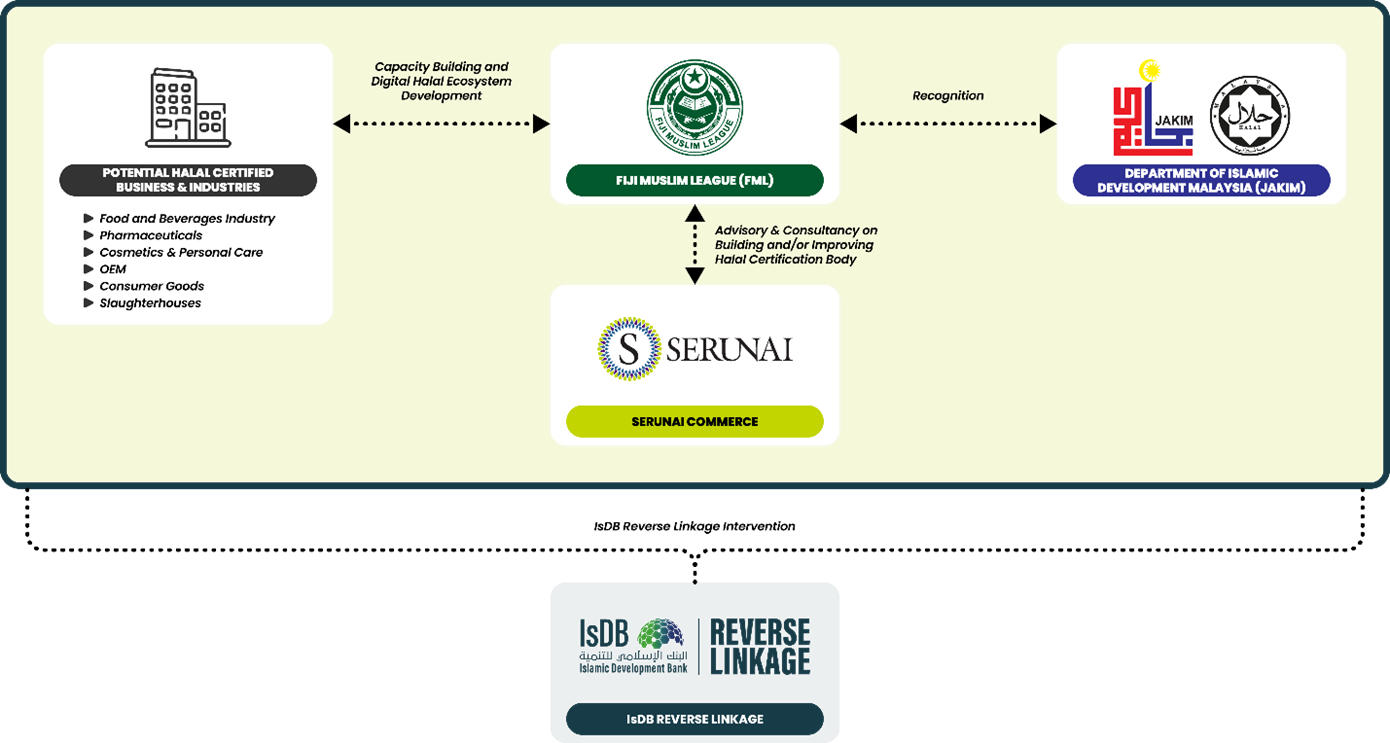
The solution adopted a two-phase methodology. First, it introduced Serunai, a private sector entity, operates its digital ecosystem (VH SMART™, CBMS™, Verify Halal™) to automate certification processes, incorporating real-time tracking and data analytics, in coordination with Fiji’s national Halal Certifying Body, FML. Second, it enhances the FML’s technical capacity through customised training programmes. This approach was developed through an in-depth feasibility study and continuous stakeholder consultations, ensuring the solution is aligned with Fiji’s specific requirements while being compliant with international Halal standards.
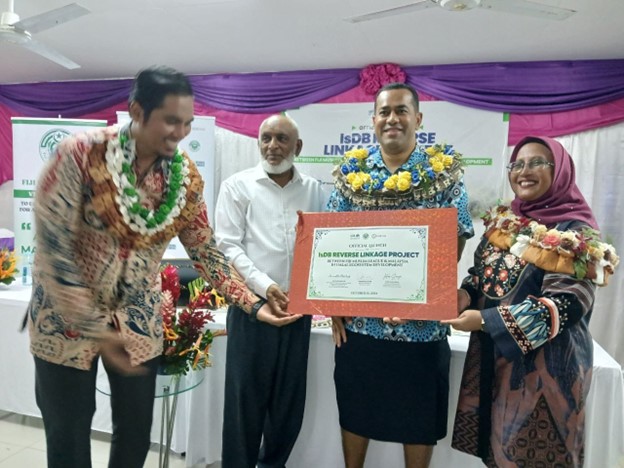
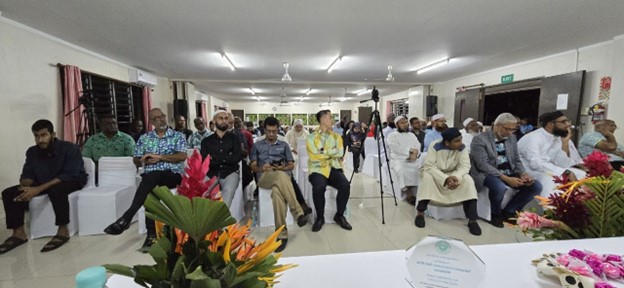
The project exemplifies effective SSTrC in action, with Serunai contributing knowledge and expertise through proven digital solutions, FML serving as the recipient organisation implementing an autonomous system tailored to its context, and IsDB acting as both facilitator and catalytic financier. To further strengthen national ownership, FML together with Fiji’s Ministry of Agriculture and Waterways has aligned the initiative with the country’s broader economic development priorities, particularly in trade diversification and the digitalisation of the Halal certification process. This collaboration has fostered coordinated action and multi-stakeholder engagement, paving the way for a harmonised national Halal certification framework. In addition, it has helped to raise awareness and encourage the agriculture sector to embrace Halal certification as part of its growth and diversification strategy.
This Reverse Linkage project fostered a win-win scenario, mutually reinforcing the long-term sustainability of the engagement. Fiji benefits from Malaysia’s advanced Halal certification expertise, while Malaysian businesses gain opportunities in Fiji’s emerging Halal market, supported by the goodwill generated through the project. The partnership is expected to deliver systemic improvements by transitioning from paper-based processes to a digital platform, with preliminary findings indicating a 60% reduction in processing time. The automated system will accommodate increased Halal certification applications and enhance compliance monitoring, addressing previous challenges in data management and standardisation.
The strength of the initiative lied in its holistic approach, integrating digital transformation with institutional capacity building. Unlike traditional technical assistance programmes, this engagement offers distinct value by the involvement of the Fijian Government’s via the Ministry of Agriculture and Waterways, the digital platform’s commercial viability supported by competitive and sustainable fee structure, and ongoing capacity building for FML through its partnership with Serunai. This model has positively influenced discussions on the possibility of integrating Halal certification into Fiji’s broader public trade facilitation framework.
Long-term sustainability is further ensured through subsequent cooperation agreements between the FML and Serunai Commerce for ongoing technical support, coupled with the FML's integration of digital certification into its operational procedures.
The good practice demonstrates strong replicability for other Small Island Developing States (SIDS) and countries across the Global South, contingent on three key conditions, namely (i) basic digital infrastructure, (ii) a reliable and recognised Halal certification body, and (iii) sustainable partnership frameworks for knowledge transfer. The project design includes adaptability features allowing customisation for different regulatory environments and sectoral needs. Preliminary discussions suggest potential adaptation to the context of Pacific Island nations with similar Halal certification challenges.
Key outcomes include:
- Establishment of Fiji's first digital Halal certification platform
- Training of Trainers of 20 FML staff in digital system management
- Upcoming migration of existing physical certification records to the new system
- Development of standard operating procedures aligned with international Halal requirements
The initiative offers valuable lessons about sequencing institutional and technological reforms. Early stakeholder mapping proved critical for addressing coordination challenges, while phased implementation allowed for continuous system refinements. The experience underscores how digital solutions can leapfrog traditional capacity constraints when combined with strong multi-stakeholder partnerships and government support.
Looking ahead, the project is expected to enhance Fiji's export competitiveness in key sectors like fisheries and agro-processing, with preliminary estimates suggesting potential 20-30% growth in Halal-certified exports within three years. As the system matures, its data analytics capabilities can potentially provide valuable market intelligence to guide Fiji's broader Halal economic strategy, creating a cycle of improvement and expansion

Contact Information
1. Intan Suriya, Director of International Partnership, Serunai Commerce Sdn Bhd (Technical Support Provider) 2. Aminuddin Mat Ariff, Lead Technical Cooperation Specialist (Reverse Linkage), Islamic Development Bank(Facilitator)
Countries involved
Fiji, Malaysia
Nominated By
Islamic Development Bank (IsDB)
Supported By
Serunai Commerce Sdn. Bhd. (Serunai), Malaysia
Implementing Entities
Fiji Muslim League (FML), Fiji Serunai Commerce Sdn. Bhd. (Serunai), Malaysia
Project Status
Completed
Project Period
4/2024 - 11/2025
Sectors
Commerce, Trade, Capacity Building, Digital Transformation
URL of the practice
https://serunai.com/Primary SDG
09 - Industry, Innovation and Infrastructure
Secondary SDGs
17 - Partnerships for the Goals
Primary SDG Targets
9.a 9.bSimilar Solutions