Strengthening Local Leadership for Sustainable Urban Development
Strengthening Local Leadership for Sustainable Urban Development


Challenges
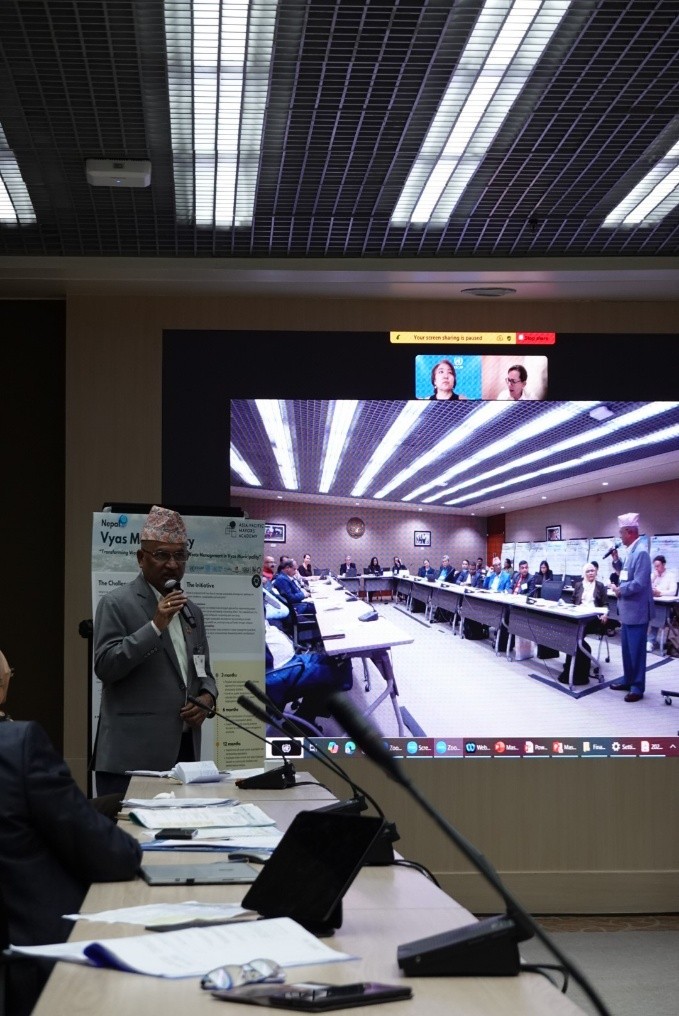
Urbanization in the Asia-Pacific region presents both opportunities and challenges, with cities experiencing rapid growth, environmental pressures, and governance gaps. Many local governments struggle with limited institutional capacity, inadequate financial resources, and insufficient technical knowledge to implement sustainable urban policies effectively. Moreover, newly elected mayors often lack platforms for knowledge-sharing and capacity-building, leading to fragmented urban planning approaches. These gaps hinder cities from achieving the SDGs, particularly SDG 11 on sustainable urban development along with other goals such as SDGs 12, 13, and 17. Recognizing these challenges, ESCAP, in partnership with UCLG-ASPAC and UN-Habitat, launched the Asia-Pacific Mayors Academy, which has trained 19 mayors from 9 countries, helped strengthen local leadership, shape locally driven initiatives through peer-learning and expert guidance, and supported cities in preparing Voluntary Local Reviews aligned with the SDGs.
Towards a Solution
To address governance and capacity gaps in urban leadership, the Asia-Pacific Mayors Academy was established as a joint initiative by ESCAP, UCLG-ASPAC, and UN-Habitat and other regional partners. The Academy provides targeted executive training for newly elected mayors, equipping them with practical tools to implement sustainable urban solutions that align with the SDGs.
The Academy follows a structured approach that combines expert-led training, peer-learning, and Voluntary Local Reviews (VLRs). Through biweekly online sessions and facilitated dialogues, mayors exchange best practices, analyze case studies, and receive guidance on urban resilience, smart city solutions, sustainable financing, and climate adaptation. The curriculum is grounded in ESCAP and UN-Habitat’s “Future of Asian & Pacific Cities” report, ensuring relevance to current urban challenges.
A key feature of the Academy is its emphasis on the VLR process, which helps mayors align local urban strategies with global sustainability goals. By undertaking VLRs, city leaders are empowered to assess progress, identify policy gaps, and design evidence-based urban initiatives. Six cities—Subang Jaya, Sepang, Naga, Nakhon Si Thammarat, Surabaya, and Dhulikel—have successfully completed VLRs following their participation in the Academy, showcasing how local planning can reflect global goals.
The Academy’s impact is reflected in the outcomes achieved by its participants. Between 2022 and 2023, two Academy cohorts trained 19 mayors across nine countries (Azerbaijan, Bangladesh, India, Indonesia, Malaysia, Maldives, Nepal, the Philippines, and Thailand). These mayors developed context-specific urban initiatives—such as municipal digital portals in Fuvahmulah, Maldives, and a flood management plan in Kochi, India—that reflect the training’s thematic pillars. Additionally, the program has facilitated collaboration between cities, creating a regional network of leaders committed to advancing sustainable development.
Beyond its core training, the Academy connects mayors to broader regional platforms such as the ASEAN Mayors Forum and UCLG-ASPAC Congress, providing continuous access to resources, technical support, and South-South exchange opportunities. It has also catalyzed local action on issues like urban air pollution, with ESCAP and UCLG-ASPAC jointly supporting cities like Fuvahmulah and Jambi in implementing science-based air quality action plans.
The Asia-Pacific Mayors Academy offers a scalable model for leadership development in urban governance. Its structured training modules, adaptable learning approach, and regional networking opportunities make it a replicable best practice for other regions. Countries looking to strengthen urban leadership can tailor the Academy’s methodology to their specific governance contexts, ensuring that mayors are equipped to address emerging urban challenges, such as digital governance and smart infrastructure development.
Key lessons from the initiative emphasize the importance of capacity-building in urban governance. Engaging mayors early in their tenure has proven crucial in shaping long-term policy directions. Moreover, fostering peer-to-peer exchanges has facilitated innovation and problem-solving, enabling cities to learn from one another and adapt best practices. The initiative also highlights the role of multi-stakeholder partnerships, demonstrating that collaboration between local governments, regional institutions, and international organizations is essential for effective and sustainable urban development.
Moving forward, ESCAP and its partners aim to expand the Academy’s thematic scope to include areas such as climate finance and digital transformation. The initiative also benefits from inclusion in the Urban-Act project, launched in 2022 supported by GIZ and the International Climate Initiative, to drive low-carbon and climate-resilient development through 2027 in countries including China, Indonesia, India, the Philippines, and Thailand.


Contact Information
Curt Garrigan, Chief, Sustainable Urban Development Section, Environment and Development Division (EDD), United Nations Economic and Social Commission for Asia and the Pacific (ESCAP)
Countries involved
Azerbaijan, Bangladesh, India, Indonesia, Malaysia, Maldives, Nepal, Philippines, Thailand
Nominated By
United Nations Economic and Social Commission for Asia and the Pacific (UNESCAP)
Supported By
ESCAP, United Cities and Local Governments Asia-Pacific (UCLG-ASPAC)
Implementing Entities
ESCAP; UN-Habitat; UN University Institute for Advanced Study of Sustainability
Project Status
Completed
Project Period
10/2019
Sectors
Sustainability and Environment, Trade, Development Cooperation, Climate Change, Capacity Building
Primary SDG
11 - Sustainable Cities and Communities
Secondary SDGs
13 - Climate Action
Primary SDG Targets
11.3Similar Solutions