Adapting Population Skills to the Post-Pandemic Economy in Ferghana Valley, Uzbekistan
Reskilling and digital leapfrogging for inclusive, future-ready employment in Uzbekistan’s Ferghana Valley
Challenges
In the wake of the COVID-19 pandemic, Uzbekistan\\\'s Ferghana Valley – home to a high proportion of youth and informal workers – faced increased unemployment, skill mismatches, and technological lag. Traditional education systems were ill-equipped to meet the demands of a rapidly evolving labor market shaped by automation, digitization, and new business models. Groups in vulnerable situations such as young women, returnee migrants, and informal sector workers lacked the digital and technical skills needed to transition into decent work. Moreover, the absence of harmonized professional standards and weak links between education, labor markets, and innovation constrained inclusive growth. The project recognized the urgency of building a future-ready workforce through a comprehensive reskilling strategy, aligned with global standards, modern labor demands, and inclusive development priorities. It addresses the dual challenge of equipping workers for digital economies while creating institutional pathways for sustained, equitable employment growth.
Towards a Solution
To respond to the post-pandemic challenges in Uzbekistan’s Ferghana Valley, the project “Adapting Population Skills to the Post-Pandemic Economy” introduced an integrated model for workforce transformation focused on reskilling, digital entrepreneurship, and institutional innovation. The project is rooted in the country’s broader reform agenda and aligned with the UN Sustainable Development Cooperation Framework’s Outcome 3, emphasizing decent work and inclusive growth.
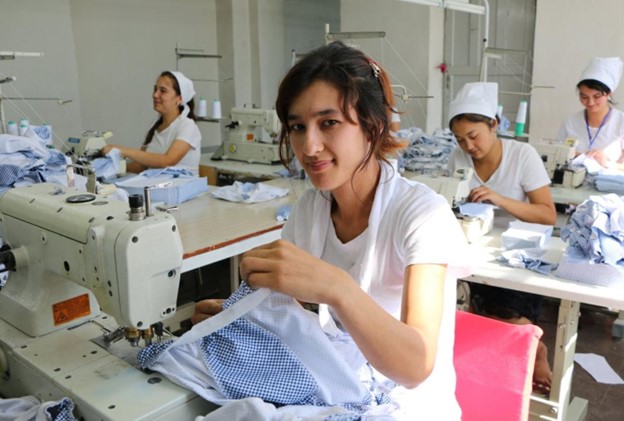
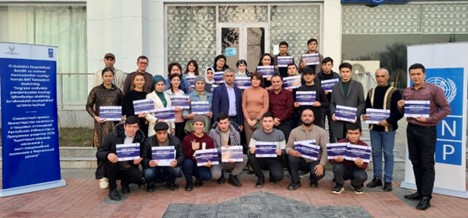
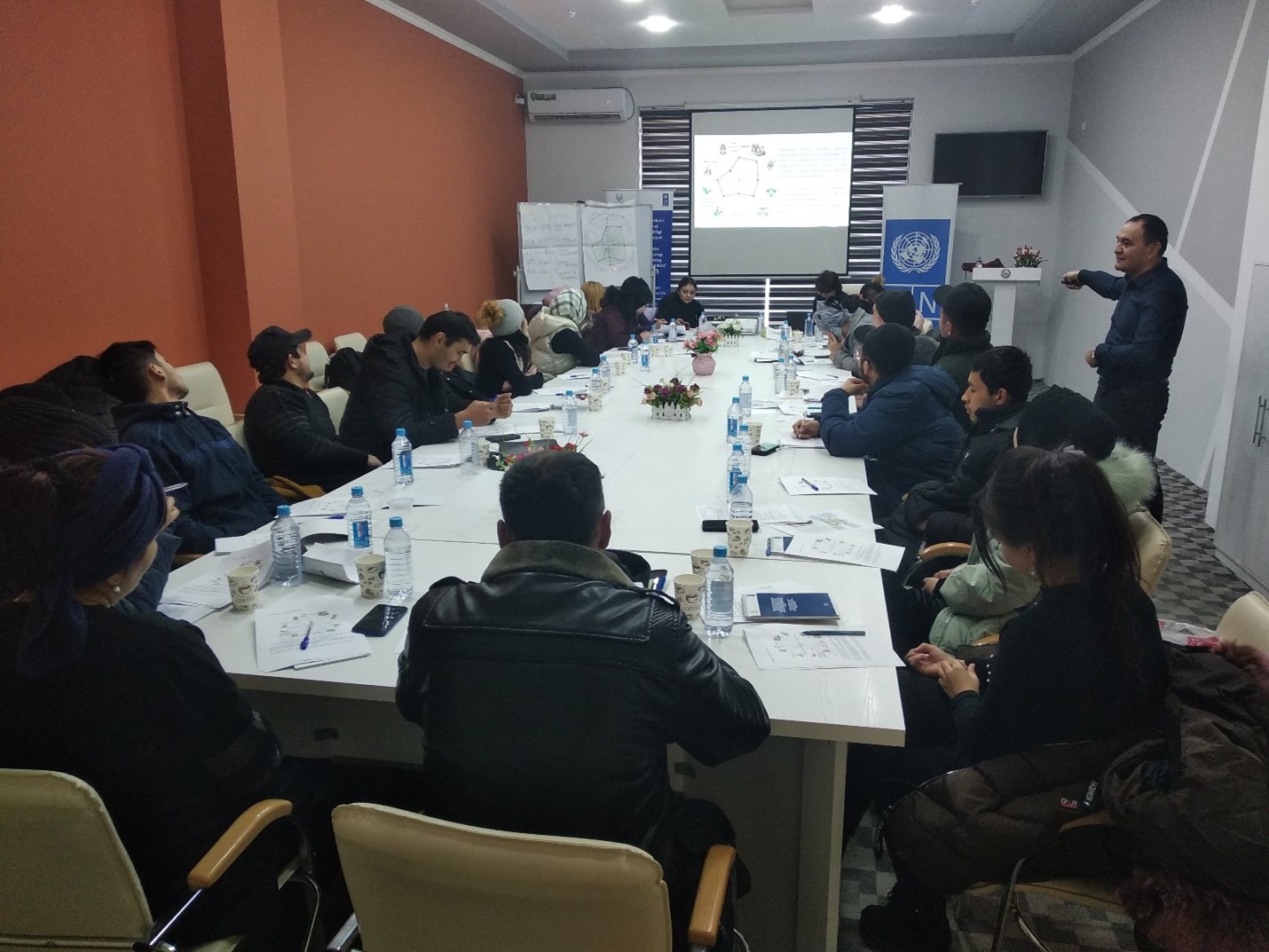
The initiative worked with local professional development centers (Monocenters) in Ferghana, Andijan, and Namangan regions to design and implement skill development programs targeting low- or semi-skilled youth. Over 600 individuals, including 28 trainers, completed three-month offline courses in high-demand fields such as welding, electrical engineering, babysitting, bakery, and design. To ensure knowledge sustainability, a training-of-trainers component was implemented, accompanied by the development of comprehensive instructional manuals.
Beyond technical training, the project strengthened Uzbekistan’s participation in the global WorldSkills movement. It supported national competitions in six skill areas and facilitated the participation of four Uzbek representatives in the WorldSkills Asia Championship (Abu Dhabi, 2023). Additionally, national experts engaged in global dialogue at the WorldSkills Congress in Dublin. These engagements elevated skill standards and positioned Uzbekistan as an emerging leader in vocational excellence.
The project also focused on entrepreneurship as a pathway to employment. Through a competitive business acceleration program, 18 youth-led initiatives across the three regions were awarded equipment-based grants totaling $80,000. These ventures led to the creation of 126 new jobs for women and youth. A second stream of support targeted creative industries, tourism, and agri-processing. Over 50 applications were received and 84 participants trained in business development and technology integration.
To build digital readiness, the project introduced and scaled up multiple digital tools:
- “Imo Ishora”, a web-based video transmission service, enabled online sign language interpretation, providing equal access to vocational services for persons with disabilities.
- A virtual reality-based vocational guidance platform and AI-powered chatbot were launched to support career decision-making and streamline access to labor market data.
- A national conference, “Digital Ferghana Valley,” brought together 80 digital entrepreneurs, public sector actors, and civil society representatives from across Uzbekistan, Kyrgyzstan, and Tajikistan to enhance regional cooperation and dialogue.
Institutional reforms supported by the project included the development and submission of national vacancy descriptions and professional standards aligned with the ISCO-08 international classification to the Cabinet of Ministers for approval. For the first time, Uzbekistan’s vocational framework will be harmonized with international norms.
Partnerships with Russian institutions played a key role in knowledge transfer and innovation. The consulting firm “Navigatum” conducted a five-day training on career guidance systems, including the creation of “situational rooms” for career counseling. In December 2023, a bilateral internship between the Uzbek and Russian education ministries facilitated the localization of construction curricula and standards. The project also introduced a Russian-inspired methodology for assessing customer satisfaction in public employment services.
The project’s inclusive design ensured gender equality and social equity. Among the 280 individuals trained in digital entrepreneurship, 89 were women entrepreneurs and 64 were assistants to local authorities (hakims). Trainings emphasized financial literacy, social support systems, and digital market integration.
Sustainability is embedded through institutional partnerships, standardization of vocational content, and digital infrastructure development. Monocenters will continue to provide training with improved capacity and curricula. Harmonization with ISCO-08 ensures that skills acquired are transferable and recognized internationally.
The project’s model – blending technical upskilling, digital innovation, and regional cooperation – is highly replicable across Central Asia and other post-pandemic settings. Its emphasis on continuous learning, cross-sectoral collaboration, and future-of-work readiness makes it a leading example of adaptive post-crisis recovery. Key lessons include the need for inclusive design, alignment with labor market trends, and the value of international partnerships in accelerating systemic change.
Contact Information
Mr. Nikolai Komarkov, Third Secretary, Permanent Mission of the Russian Federation to the UN
Countries involved
Uzbekistan
Nominated By
Permanent Mission of the Russian Federation to the United Nations
Supported By
Government of the Russian Federation
Implementing Entities
UNDP Uzbekistan and the Ministry of Employment and Labour Relations of the Republic of Uzbekistan
Project Status
Completed
Project Period
1/2021 - 6/2024
Sectors
Education, Industrial Development, Labour, Youth, Population, Capacity Building, Digital Transformation
URL of the practice
https://www.undp.org/uzbekistan/projects/completed-population-skills-post-pandemic-economyPrimary SDG
08 - Decent Work and Economic Growth
Secondary SDGs
04 - Quality Education, 09 - Industry, Innovation and Infrastructure, 10 - Reduced Inequalities
Primary SDG Targets
8.3 8.5 8.6Similar Solutions