Accelerating Clean Energy Access to Reduce Inequality (ACCESS)
If you want to go fast, go alone; if you want to go far, let’s go together

Challenges
Timor-Leste’s National Strategic Development Plan (2011-2030) targets that everyone will have access to reliable electricity 24 hours a day by 2030. Based on the National Rural Electrification Master Plan (REMP), in 2018, the electricity grid had reached most parts of the country. However, over 25% of villages still lack access to electricity, particularly for lighting. Additionally, rural women and girls are often responsible for collecting fuel for cooking and lighting.
Also, in rural area, women and girls are often primarily responsible as energy producers for household to collect fuel for cooking and lighting.
Towards a Solution
The objective of the Accelerating Clean Energy Access to Reduce Inequality (ACCESS) project is to support the poor and most vulnerable communities to have equitable and sustainable access to basic services for improving their livelihoods. The ACCESS project has been implemented since 2020, in 23 villages in four provinces in Indonesia (East Nusa Tenggara, West Sulawesi, South East Sulawesi and Central Kalimantan provinces) and 25 villages in three municipalities of Timor Leste (Municipality of Dili (Atauro), Bobonaro and Manatuto).
In this manner, the ACCESS project has been funded from the grant of USD 18,028,509 from the Korea International Cooperation Agency (KOICA), from which Indonesia's allocation is USD 15,028,509 and USD 3 million for TimorLeste. UNDP Indonesia is the implementation partner of KOICA for the ACCESS project.
In order to jump into the project, under overall project management oversight by UNDP Indonesia, the UNDP Timor-Leste was responsible for producing Output two under South-South Triangular Cooperation (SSTC) activities with Indonesia in forms of clean energy technology and technical certification for local operators.
In addition, for the project implementation, ACCESS project was supported by the Project Management Unit (PMU) in Indonesia and Timor-Leste. The Ministry of Energy and Mineral Resources (MEMR) and KOICA Indonesia are the counterparts in Indonesia, while the Ministry of State Administration (MSA), KOICA Timor-Leste are the counterparts in Timor-Leste. These counterparts are the project board members expected to steer and provide strategic direction to the PMU.
With this project implementation, remarkable achievements have been accomplished as below;
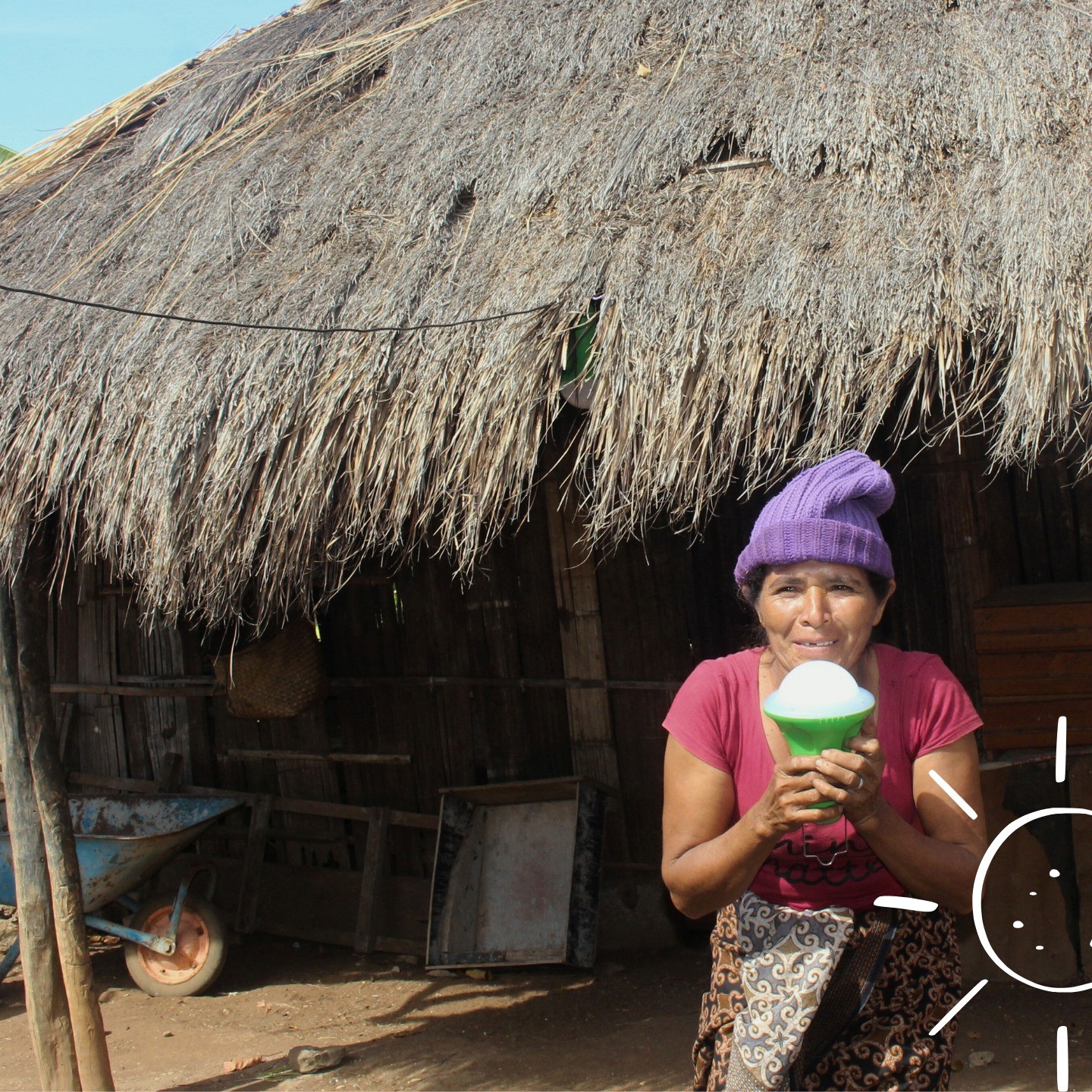
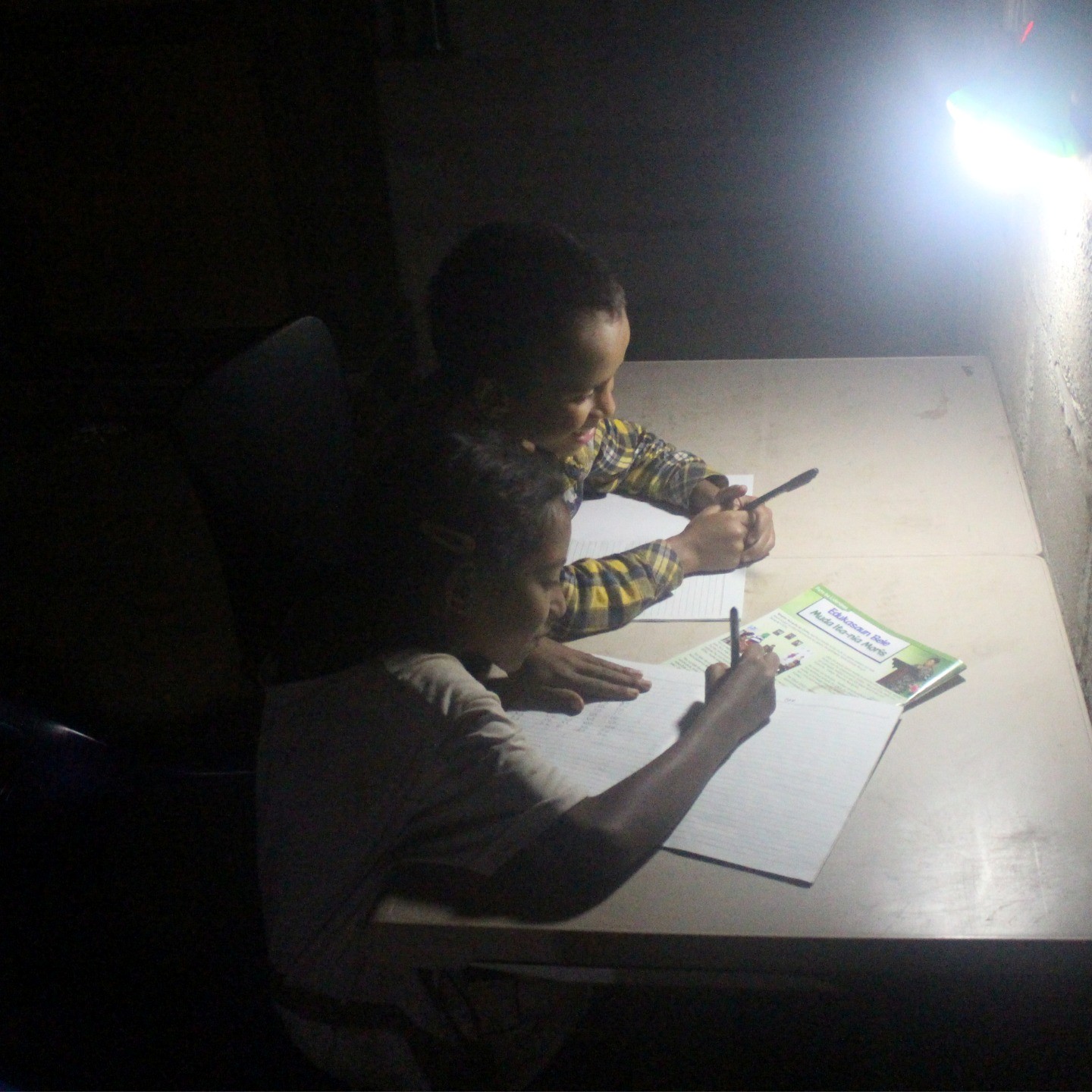
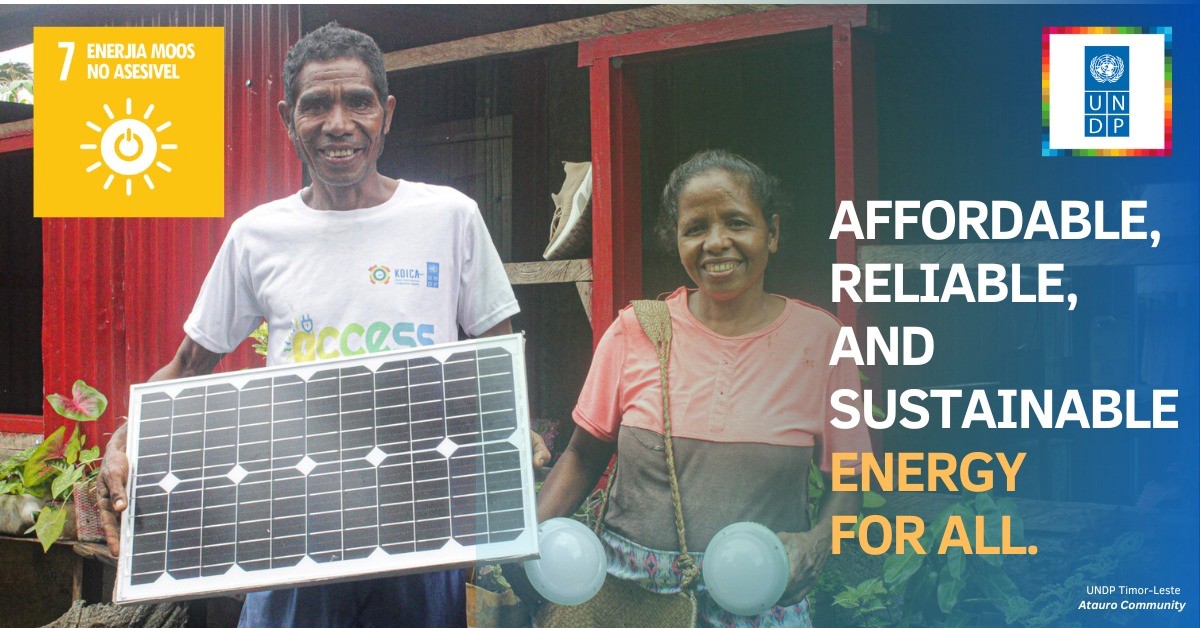
- 1000 Highly Efficient Solar Lamp Systems (LTSHE) are provided benefiting 5341 people (47% women, 53% men, and 1712 students)
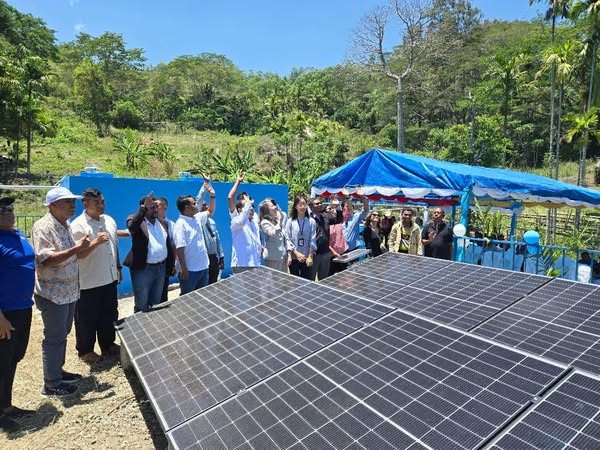
- Ten (10) solar water pump (SWP) systems are constructed in 11 sites that provide water to 684 households in three municipalities and benefit more than 2561 people (51% women and 49% men)
- Seven (7) Environmental licenses from ANLA (National Authority for Environmental License have been obtained.
- Five (5) Cultural Ceremonies were completed in 5 water sources in Manatuto and Bobonaro
- The Detailed Feasibility Study for the Solar Water Pump System has been completed by the collaboration between Badan Riset dan Inovasi Nasional (BRIN) and Universidade Nacional Timor Lorosa’e (UNTL).
- Seven (7) water sources in three municipalities, including Bobonaro, Ataúro, and Manatuto, have been tested for quality assurance.
- Thirty (30) local operators from the three municipalities (Bobonaro, Ataúro, and Manatuto) who will operate and maintain the Solar PV Water Pump System have been trained and certified in Jakarta by the Human Resource Development Centre on Electricity, New Renewable Energy, and Energy Conservation of Indonesia, PPSDM KEBTKE (Pusat pengembangan Sumber Daya Manusia Ketenagalistrikan, Energi Baru, Terbarukan dan Konservasi Energy) under the South-South Cooperation framework
Moreover, beyond its own specific achievements, the project also delivered impressive results on a broader scale. Firstly, as KOICA’s first triangular and South-South cooperation project, its successful implementation has paved the way for expanding KOICA’s partnerships with various international organizations and countries. Secondly, although Timor-Leste and Indonesia share a history marked by colonial rule and conflict, this project has contributed to reconciliation and peacebuilding by fostering cooperation between the two nations. Lastly, the cooperation model and its specific achievements have provided a valuable precedent for other donor agencies, international organizations, and partner countries to refer to when pursuing future South-South cooperation initiatives.
Contact Information
Sung Hwan JANG, Deputy Country Director, KOICA
Countries involved
Indonesia, Republic of Korea, Timor-Leste
Nominated By
Korea International Cooperation Agency (KOICA)
Supported By
Korea International Cooperation Agency (KOICA)
Implementing Entities
United Nations Development Programme (UNDP)
Project Status
Ongoing
Project Period
1/2020 - 12/2026
Sectors
Gender Equality and Empowerment of Women, Climate Change, Capacity Building
URL of the practice
https://www.undp.org/timor-leste/projects/accelerating-clean-energy-access-reduce-inequality-accessPrimary SDG
07 - Affordable and Clean Energy
Secondary SDGs
05 - Gender Equality
Primary SDG Targets
7.1Similar Solutions