Space-IoT Solution Box for Climate-Smart Agriculture in Africa
Empowering Climate-Smart Agriculture with Copernicus and IoT Innovations for Smallholder Farmers in Africa
Challenges
Smallholder farmers in the Lake Victoria Basin, which spans Kenya, Uganda and Tanzania, face an increasing number of climate-related threats, including erratic rainfall, prolonged droughts, floods and declining soil fertility. These conditions reduce crop yields, threaten the productivity of fisheries, and compromise the food security of over 35 million people in the region.
Although Copernicus Earth Observation data and Internet of Things (IoT) solutions could help, their adoption in Africa is limited due to a lack of awareness, technical skills, infrastructure, and adaptation to local contexts. Poor connectivity, limited access to weather and soil data, and fragmented stakeholder engagement also hinder the development of effective climate-smart agriculture.
To address these challenges, it is necessary to integrate space-based and in-situ data, build local technical capacity, and foster public-private partnerships to develop region-specific, actionable solutions that can be sustained and scaled.
Towards a Solution
The KijaniSpace initiative - 'green space' in Swahili — aims to transform climate-smart agriculture in Africa by integrating Copernicus Earth observation (EO) data with in situ Internet of Things (IoT) infrastructure to provide smallholder farmers with actionable, locally relevant solutions.
At its core is the SpaceIoTBox: an integrated online resource platform bundling EO data, IoT sensor inputs, weather and agroclimatic tools, training materials and application prototyping environments. The purpose of SpaceIoTBox is to enable the creation of the Copernicus applications matching local users' needs. SpaceIoTBox integrates several tools and services with the Copernicus EO infrastructure for climate-smart agriculture in the Lake Victoria Basin.
The process was highly participatory, reflecting the multi-actor and cross-continental nature of the consortium. From the design of the project onwards, African and European partners worked together to create the framework, ensuring that technical capabilities aligned with local needs. The Lake Victoria Basin Commission (LVBC) played a pivotal role in identifying regional policy priorities, thereby ensuring that the project aligned with basin-wide agricultural and environmental strategies. Local Digital Innovation Hubs, such as LakeHub, facilitated dialogue with farmers, SMEs and civil society to capture user needs and barriers to adoption.
Concerted actions included:
- Joint requirement mapping workshops in Kenya, Uganda, and Tanzania to define SpaceIoTBox functionalities and pilot case criteria;
- Collaborative tool integration, where each partner contributed their specialist platforms (e.g. Meteoblue’s climate APIs, Waziup’s IoT edge devices, and Plan4All’s data analytics) into a unified system;
- Capacity-building programmes were co-developed and delivered by mixed AU-EU teams, blending remote learning with on-site hackathons.
- African partners led field deployment and European partners provided technical support for pilot demonstrations.
- Jointly hosting policy engagement sessions with LVBC and EAC representatives embedded the outcomes in regional strategies. This joint approach not only ensured technology transfer, but also co-ownership of the outcomes, thereby fostering long-term collaboration and scaling potential beyond the Lake Victoria Basin.
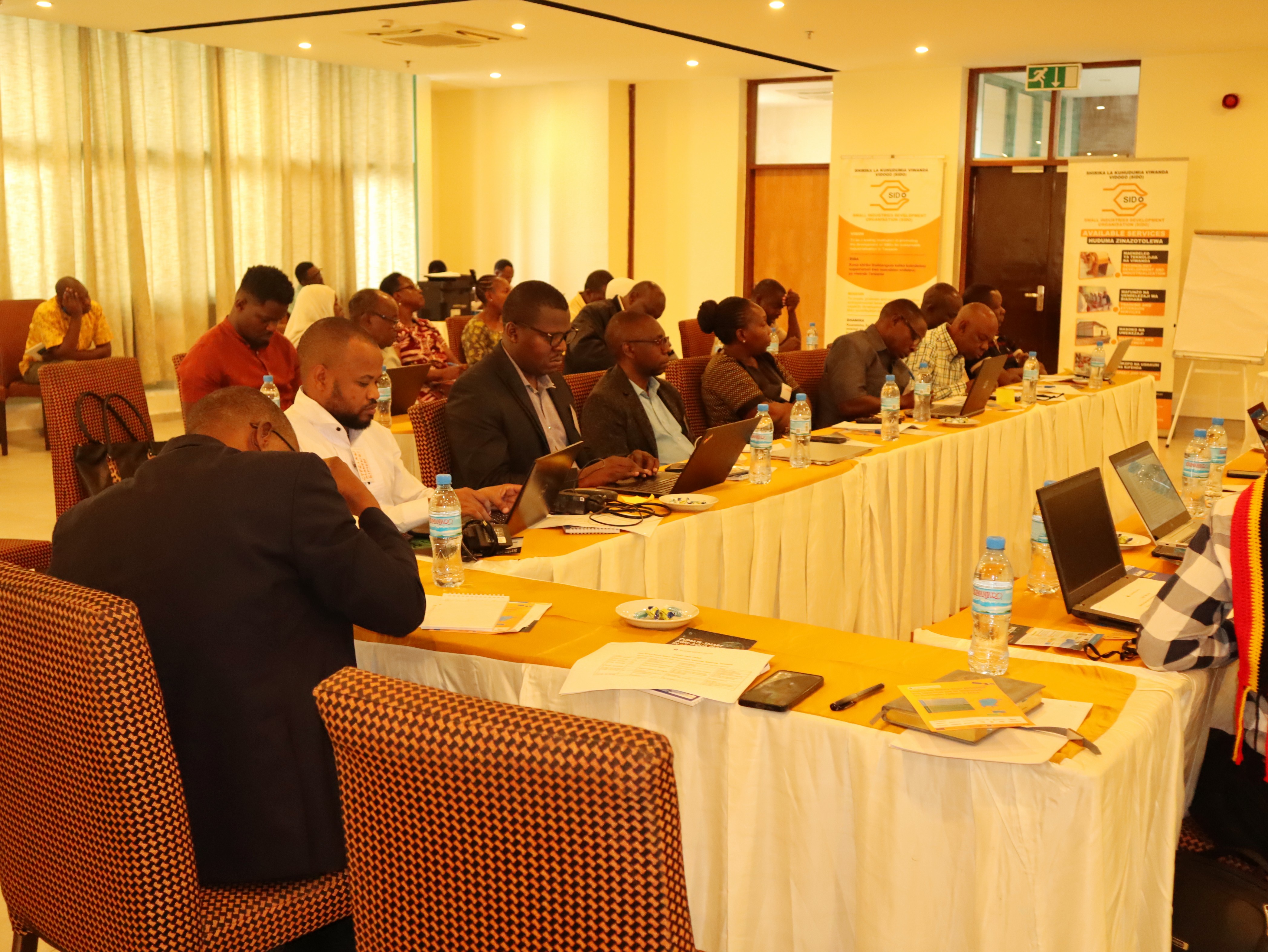
- Through the Space-IoT Talent Programme, local researchers, engineers and developers receive training and mentorship to co-create minimum viable products that address the challenges of crop and fish farming.
- The Space-IoT Innovation Programme supports SMEs and start-ups in improving their existing products using Copernicus data. These programmes organise hackathons, workshops and pilot tests on real farms and aquaculture sites to ensure that the solutions address real-world needs.
Cross-country collaboration is embedded from the outset. African and European partners co-develop and adapt tools, knowledge is transferred between LVB countries, and the solution architecture is designed for replication in other basins, such as Lake Chad or the Volta River Basin. This South-South and triangular cooperation model builds on European expertise while empowering African innovation ecosystems via Digital Innovation Hubs such as LakeHub in Kisumu, Kenya.
Outcomes include:
- Deployment of SpaceIoTBox (target TRL7) with integrated EO, IoT and climate services (SDG 9.5 and 17.6). The deployment is a direct outcome of cross-continental collaboration between African and European partners.
- Two high-impact pilot demonstrations have been carried out: predictive irrigation and crop management for smallholder farms and fishery water quality monitoring with early-warning systems (SDG 2.3, 2.4).
- Enhanced capacity of local technical users and SMEs to develop EO-based applications (SDG 8.2, 9.c). Building skills in EO and IoT expands the digital innovation base in the region.
- Policy recommendations for integrating space-based agricultural services into regional development strategies (SDG 13.2, 17.14). Aligning EO-based services with regional development frameworks fosters policy consistency and long-term sustainability.
The innovation lies in KijaniSpace’s place-based integration of global EO resources with local IoT networks and agro-climatic datasets, which are processed both in the cloud and on-farm at the “edge”. This overcomes connectivity constraints, provides hyper-local decision support and creates a competitive advantage for African agri-tech SMEs.
.jpg)
.jpg)
.JPG)

Contact Information
Dr. Eng. Abdur Rahim, Innotec21 GmbH
Countries involved
Czech Republic, Finland, Germany, Kenya, Switzerland, Uganda, United Republic of Tanzania
Nominated By
Innotec21 GmbH
Supported By
The project is financially and technically supported by the European Commission\\'s Horizon Europe program and EUSPA (EU Agency for the Space Programme).
Implementing Entities
NNOTEC21 GMBH (Germany) PLAN4ALL ZS (Czechia) HELP SERVICE REMOTE SENSING SRO (Czech Republic) SMART & LEAN HUB ?? (Finland) WAZIUP EV (Germany) AGAPE INNOVATIONS LIMITED (Uganda) AFRICA BIOENERGY PROGRAMS LIMITED (Kenya) KENYA MARINE AND FISHERIES RESEARCH INSTITUTE (Kenya) LakeHub Foundation (Kenya) SMALL INDUSTRIES DEVELOPMENT ORGANIZATION (Tanzania) LAKE VICTORIA BASIN COMMISSION (Kenya) THE MWALIMU JULIUS K. NYERERE UNIVERSITY OF AGRICULTURE AND TECHNOLOGY (Tanzania) METEOBLUE AG (Switzerland)
Project Status
Ongoing
Project Period
10/2024 - 9/2026
Sectors
Agriculture, Food and Rural Development, Research, Science, Technology & Innovation, Sustainability and Environment, Development Cooperation, Climate Change, Capacity Building, Data and Research
URL of the practice
www.kijanispace.euPrimary SDG
02 - Zero Hunger
Secondary SDGs
08 - Decent Work and Economic Growth
Primary SDG Targets
2.4Similar Solutions