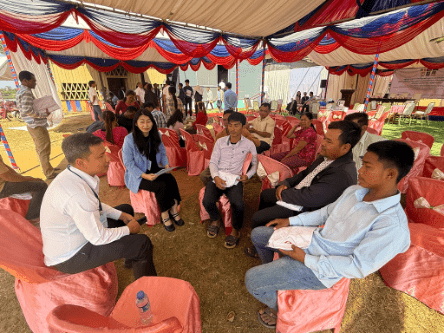
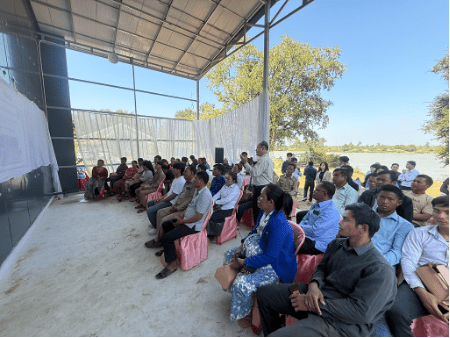
Sdao Commune, Sesan District, Stung Treng Province, Cambodia – 15 January 2026
The renewable water treatment facility installed under “Improving Access to Clean Water and Increasing Food Security in Sdao Commune, Sesan District, Stung Treng Province,” a Cambodia pilot initiative of P-LINK—also known as the Republic of Korea–UNOSSC Facility (Phase 3)—has been officially handed over to Stung Treng authorities, marking the successful completion of a 15-month science, technology, and innovation (STI)–driven Water-Energy-Food (WEF) Nexus intervention. The initiative represents the first technology-based development cooperation project hosted by the Sdao community.
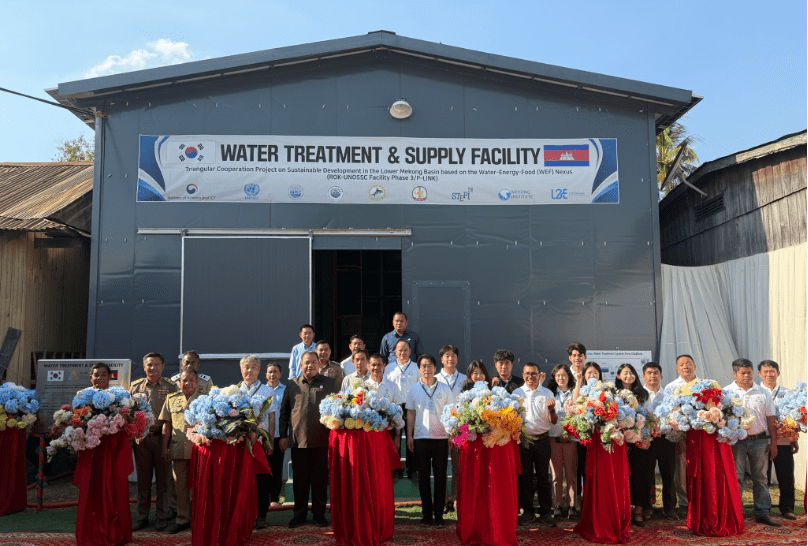
Group photo following the official hand over of the water treatment system
Watch the Video
Located at the confluence of the Sekong, Sesan, and Srepok rivers—collectively known as the Mekong “3S” system—Stung Treng Province plays a critical role in regional water and food security. The area supports agriculture, fisheries, and river-dependent livelihoods while remaining highly vulnerable to seasonal water variability and climate pressures. Strengthening community-level water management in Stung Treng is therefore essential not only for local development, but also for building resilience across the wider Mekong Basin.
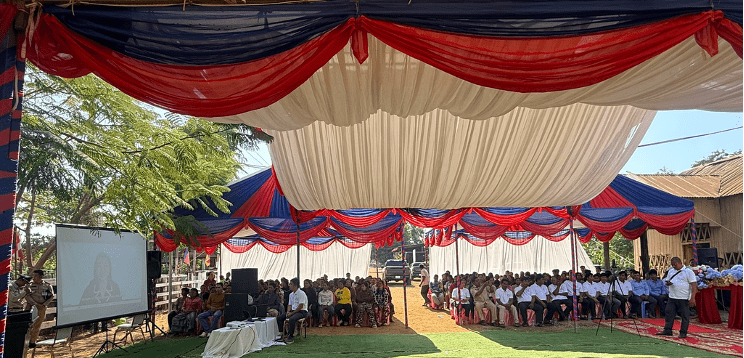
Ms. Wang’s recorded remarks during the handover ceremony
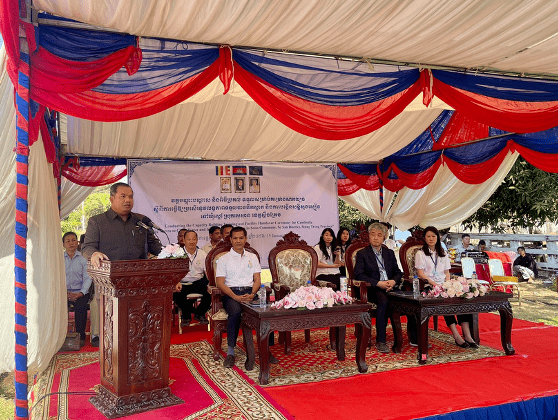
Governor of Stung Treng Province delivering his remarks
The official handover ceremony was held on 15 January 2026 in Sdao Commune, following the completion of technical and non-technical capacity-building training delivered to local operators, government officials, and community representatives. More than 200 community members participated in the event, held under the leadership of H.E. Mr. Sar Sok Putra, Governor of Stung Treng Province; H.E. Mr. So Sophort, Secretary-General of the Cambodia National Mekong Committee; and Mr. Piseth Sovanna, Governor of Sesan District. The ceremony formally transferred responsibility for the facility from the project to Cambodian institutions, signaling the transition from implementation to locally led operation and long-term sustainability.
In her virtual congratulatory remarks, Ms. Xiaojun Grace Wang, Director of the UNOSSC Trust Fund, highlighted that the handover reflects UNOSSC’s core mandate to translate South-South and triangular cooperation into tangible, community-level impact. She emphasized that innovation has real value only when it is grounded in local needs, strengthens local capacity, and is ultimately owned and sustained by the communities it is meant to serve.
Designed and installed by L2E Solution, a Republic of Korea–based technology start-up, the water treatment and supply system is tailored to meet both domestic and agricultural needs. The system has the capacity to deliver approximately 200 cubic metres per day of safe water for 386 households—benefiting an estimated 1,637 people—and up to 1,000 cubic metres per day for agricultural use. By integrating household water supply and irrigation within a single system, the pilot demonstrates a practical and accessible WEF Nexus solution suited to rural, Mekong-dependent communities.
Technically, the facility represents a fully integrated WEF-based solution, incorporating advanced water treatment processes including ultrafiltration, dual-media filtration, activated carbon, and disinfection. The system has been carefully adapted to local raw water quality and the seasonal variations of the Mekong River, ensuring reliable operation during both rainy and dry seasons. Visual flow diagrams, daily operational checklists, and safety guidance are installed on site to support effective day-to-day operation by local technicians.

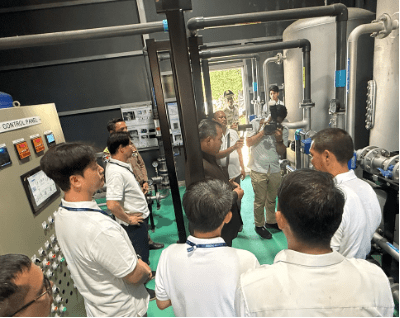
Study tour inside the facility to learn about the system
Capacity building was a core component of the Cambodia pilot. Training covered system operation, routine maintenance, chemical preparation and handling, PLC-based monitoring, troubleshooting, and safety procedures. Complementary non-technical training focused on basic management, record-keeping, and planning, equipping local stakeholders with the skills needed to manage the facility beyond the project period.
As part of the sustainability arrangement, Sesan District authorities formally handed over the facility to the Stung Treng Provincial Government, with responsibilities shared between the provincial water utility office (household water supply) and the Department of Agriculture (irrigation use). The Stung Treng Water Utility plans to conduct a feasibility study to assess options for direct household connections and to establish an affordable tariff structure that supports long-term sustainability.
Reflecting on the handover, Mr. Piseth Sovanna, Governor of Sesan District, underscored that the facility represents an important starting point for Sdao’s development trajectory, enabling the district and community to design sustainable water supply and irrigation services that support agricultural productivity, local income generation, and future population growth.
For the Sdao community, the pilot provides a foundation for improved livelihoods, climate resilience, and inclusive growth. Local stakeholders have expressed their commitment to share this good practice with other communities in Cambodia and across the Mekong region. Taking into account community ownership and accountability, the provincial government is also planning for future expansion, with an estimated 1,000 additional households expected to settle in Sdao.
The initiative is funded by the Ministry of Science and ICT of the Republic of Korea through the UN Fund for South-South Cooperation. UNOSSC leads the implementation in collaboration with the Mekong River Commission, Mekong Institute, and the Republic of Korea’s Science and Technology Policy Institute (STEPI).
Find out more about the P-LINK [ROK–UNOSSC Facility (Phase 3)] here