
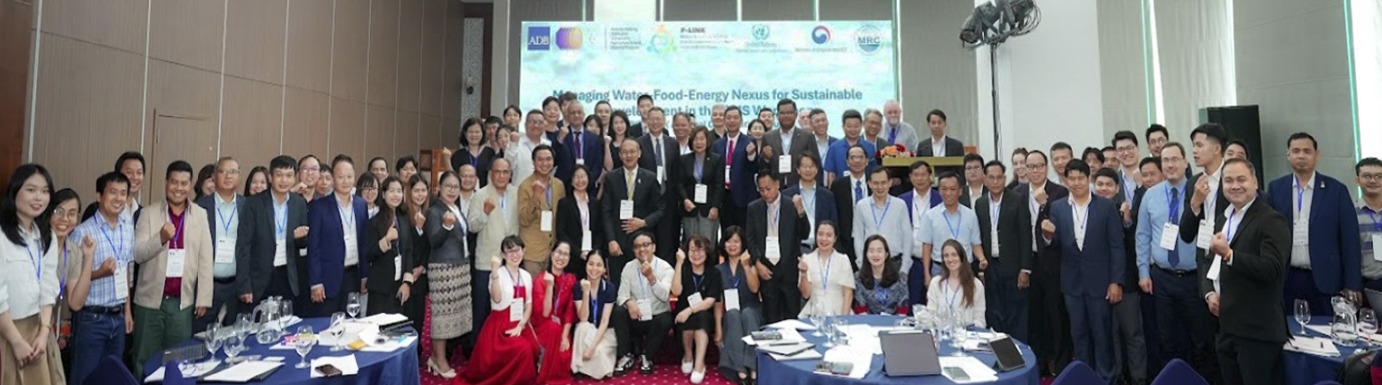
Ho Chi Minh City, Viet Nam – July 16-18, 2025 — Over 90 representatives from governments, development partners, research institutes, and the private sector gathered in Ho Chi Minh City for a three-day workshop to strengthen collaboration around the interlinked challenges of water, food, and energy in the Greater Mekong Subregion (GMS).
Co-organized by the Asian Development Bank Sustainable Agriculture and Food Security Program (TA 9916) and UNOSSC’s P-LINK (People’s Livelihoods Initiative through the WFE Nexus in the Mekong Region) initiative under the ROK-UNOSSC Facility, the workshop, titled ‘Managing the Water–Food–Energy Nexus for Sustainable Development in the Greater Mekong Subregion’, served as a platform to exchange practical experiences, innovative technologies, and integrated strategies to improve water–food–energy (WEF) security across the region.
As climate change, population growth, and rapid development intensify pressure on natural resources, the event serves as a critical platform for countries to share insights, explore integrated planning, and identify scalable solutions that balance competing sectoral demands.
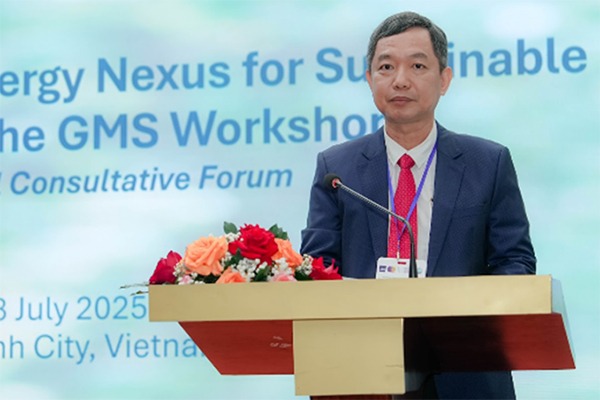
“As the host country, Viet Nam values integrated approaches to managing our WEF systems – especially in the Mekong Delta – where climate pressures are growing,” said Dr. Tran Ba Hoang, Director of the Southern Institute of Water Resources Science and Technology. “This workshop facilitates cross-sectoral dialogue and transboundary partnerships for resilient development.”
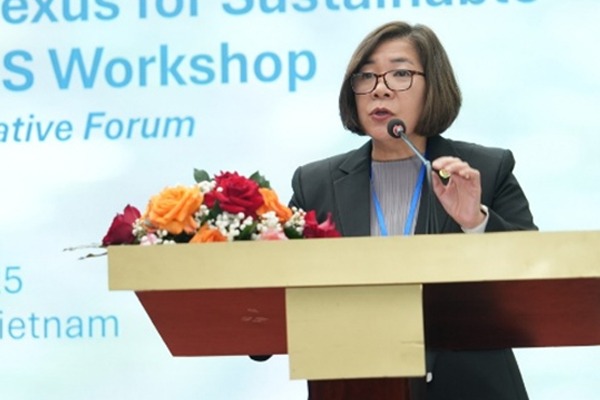
Ms. Busadee Santipitaks, CEO of the Mekong River Commission Secretariat, added, “together, we will explore ways to synergize efforts, address shared challenges, and co-develop actionable solutions toward a more integrated, inclusive, and climate-resilient Mekong Basin.”
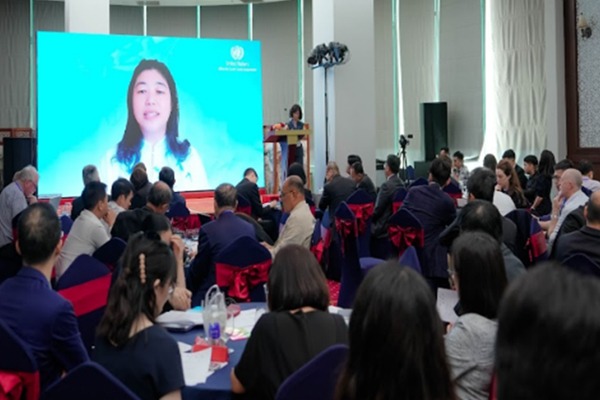
“The Water–Energy–Food Nexus calls for more than technical fixes – it requires cooperation across sectors, countries, and communities,” underscored Ms. Xiaojun Grace Wang, UNOSSC Trust Fund Director. “South-South and triangular cooperation offers a vital platform to connect knowledge, scale innovations, and drive inclusive, integrated solutions.
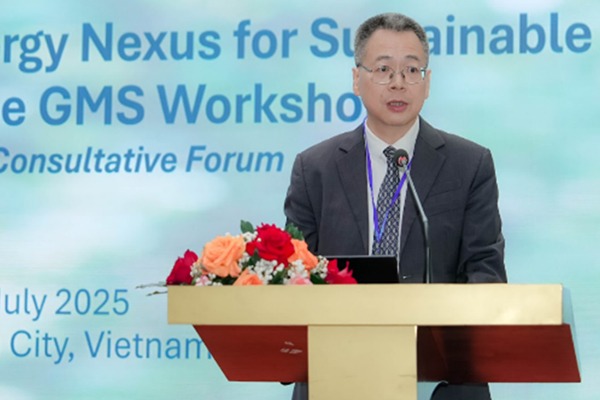
“ADB is advancing integrated Nexus approaches in the GMS, supporting digital tools, climate-smart agriculture, and nature-based solutions,” said Mr. Jiangfeng Zhang, Asian Development Bank (ADB) Director. “Our next phase will deepen regional investment and private sector engagement, in line with our $40 billion food systems commitment.”
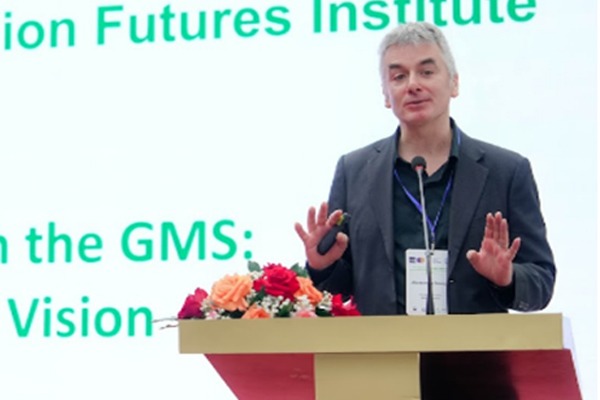
In his keynote, Dr. Alexandar Smajgl, Managing Director of Mekong Region Futures Institute (MERFI), emphasized that, “Achieving the SDGs requires moving beyond siloed mandates and embracing cross-sector solutions.” A Nexus-based strategy “could unlock up to $50 billion annually across the GMS, boosting national GDPs by as much as 5%,” he said.
Participants explored insights from P-LINK pilots, such as smart water systems in Thailand, local flood forecasting and warning system in Lao PDR and solar-powered treatment facilities in Cambodia and Viet Nam – all delivered through South-South cooperation. Meanwhile, TA 9916 program pilots demonstrated water- and energy-saving innovations in rice and fruit farming in Viet Nam and adaptive irrigation across the region.
Key questions discussed included:
- How can trade-offs between agriculture, energy, and the environment be minimized?
- What technologies are ready to scale?
- How can regional cooperation lead to smarter investments?
Government representatives and development stakeholders from Cambodia, Lao PDR, Thailand, and Viet Nam also discussed their roles and support needs to advance Nexus management.
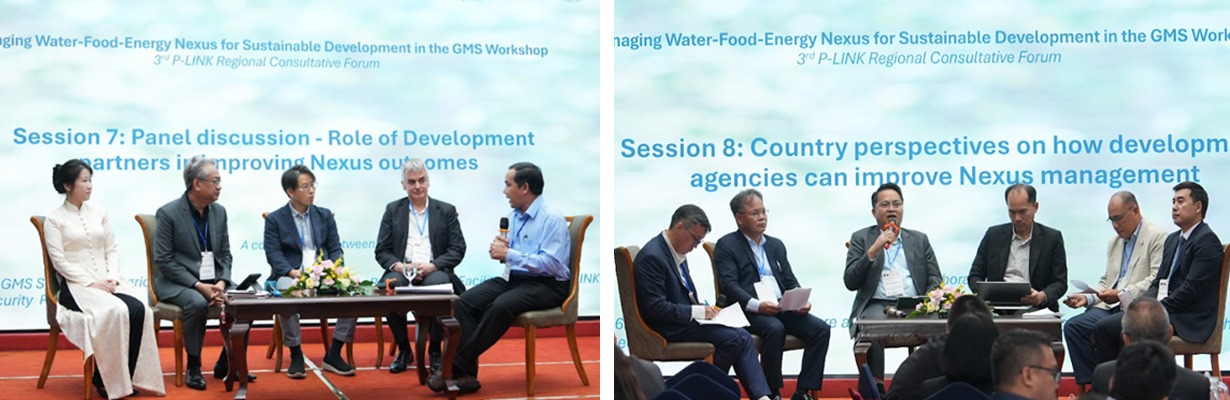
Representatives from P-LINK partner governments and institutions engage in a panel discussion on advancing Nexus cooperation
The event included technical panels, field visits to demonstration sites in the Mekong Delta, and joint planning for future regional action involving national delegations and private sector partners.
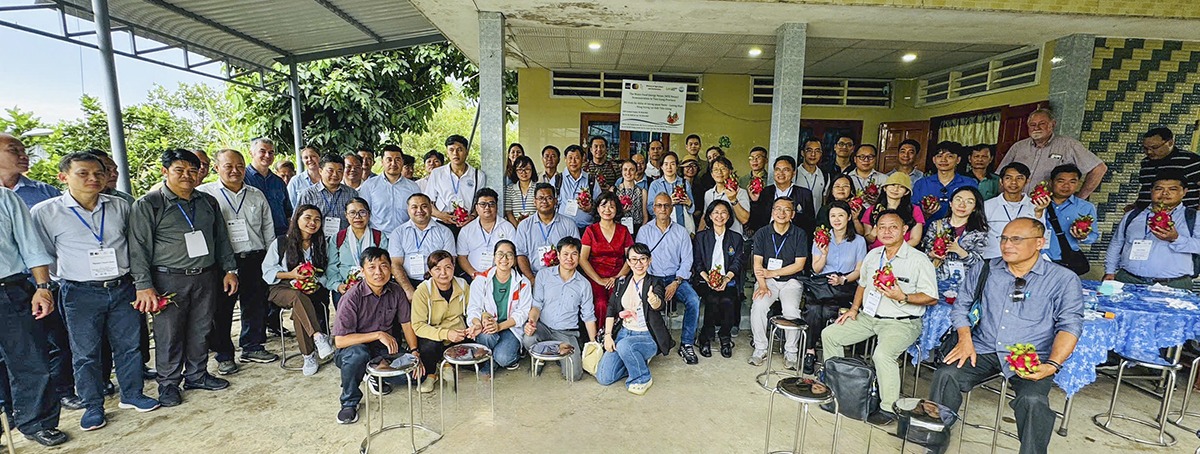
Field Visit
About the Organizers:
- TA 9916 (Greater Mekong Subregion Sustainable Agriculture and Food Security Program) is supported by the Asian Development Bank (ADB) and promotes cross-sectoral planning and climate-resilient agriculture in the GMS.
- P-LINK (People’s Livelihoods Initiative through the WFE Nexus in the Mekong Region) also known as the ROK-UNOSSC Facility (Phase 3), is funded by the Republic of Korea’s Ministry of Science and ICT. It supports locally tailored technological solutions, regional collaboration, and policy dialogue in Cambodia, Lao PDR, Thailand, and Viet Nam.