
Bung Khla leads the way in advancing national and regional water solutions, as Thailand marks UN Day for South-South Cooperation 2025 under the theme “New Opportunities and Innovation through South-South and Triangular Cooperation.”
Bung Khla, Bueng Kan Province, Thailand – 11 September 2025
A Pilot with Tangible Impact
Since its launch in July 2024, the Thai pilot—“Increasing the Efficiency of Tap Water System in Moo (means village in Thai language) 1, 2, and 3, Bung Khla Sub-district, Bueng Kan Province”—has delivered safer, more reliable water to 943 households (2,365 people).
Using smart technologies developed by Korean start-up WI.Plat—including AI-powered leak detection, mobile billing, and cloud-based monitoring—the project has reduced daily water loss by 24m³ and modernized local operations. A new water monitoring room at the Bung Khla Sub-district Administrative Office (SAO) now serves as a hub for real-time oversight, while local staff, trained in system operation and water quality management, are equipped to sustain the facility well into the future.

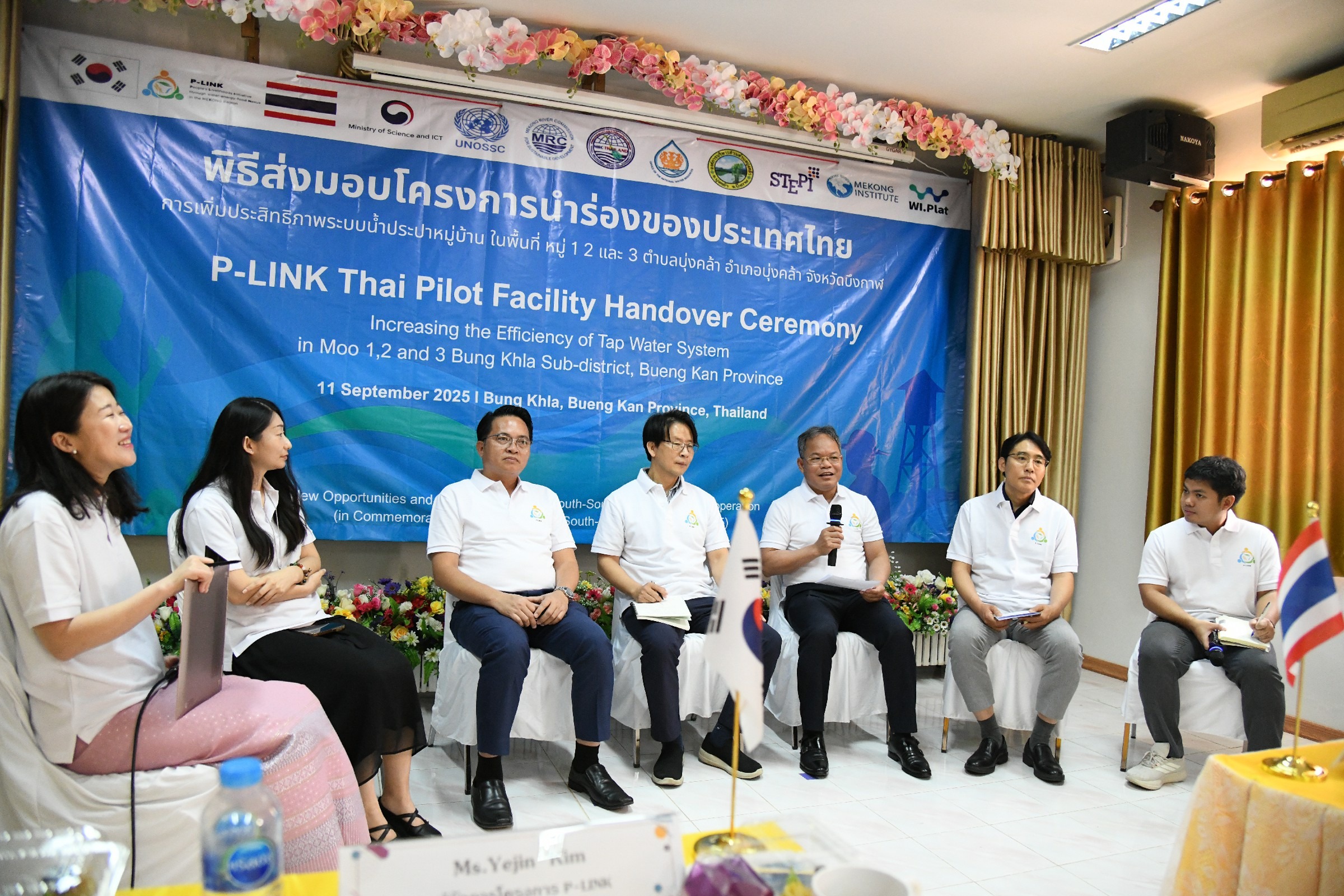
Voices from the Ceremony: Local Leadership and Community Commitment

“Bung Khla is located in a key area along the Mekong River, rich in natural resources, culture, and tradition. I commend the local leadership and commitment in driving this pilot forward, turning challenges like water leakage and quality into opportunities for innovation and cooperation,” said Mr. Somwang Areeuea, Deputy Governor of Bueng Kan Province.
At the community level, Mr. Naris Arthan, Chief Executive of Bung Khla SAO, reaffirmed ownership.“This is not only about solving today’s water issues but about building a smart water system for the future. Bung Khla is committed to sustaining the facility, ensuring that training and community ownership will make it a role model for other Mekong communities.”
National Strategy and Regional Cooperation

Linking the initiative to broader policy, Dr. Surasri Kidtimonton, Secretary-General of the Office of National Water Resources (ONWR) and member of the Thailand National Mekong Committee Secretariat (TNMCS), stated, “Aligned with our 20-Year Master Plan, this project demonstrates how innovation and South-South and triangular cooperation can turn policy into practice. It stands as a model of sustainable development and a living example of community-driven innovation under the Mekong River Commission framework.”
ROK-Innovation and Partnership
 From Republic of Korea, Mr. Sunghoon Hwang, Director-General of the Ministry of Science and ICT (MSIT), emphasized significance of Thai pilot, “Today’s handover of the Thailand pilot facility is not the end, but a visible achievement of P-LINK and a new beginning. Science, technology, and innovation are key drivers of —but P-LINK is about more than technology. At its heart are people’s livelihood and community ownership, because lasting impact depends on how communities themselves use, sustain, and build upon these innovations.”
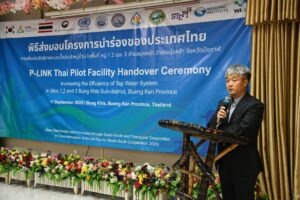 Adding a research lens, Dr. Chansoo Park, Vice President of the Science and Technology Policy Institute (STEPI), underlined the value of adaptatio, “The Thailand pilot is the result of policy research, careful technology selection, and collaboration between government, academia, communities, and the private sector. STEPI worked to ensure Korean innovations were not just transferred, but adapted to local needs. Bung Khla’s experience can inspire neighboring villages, other Mekong countries, and the wider Global South.”
United Nations Perspectives
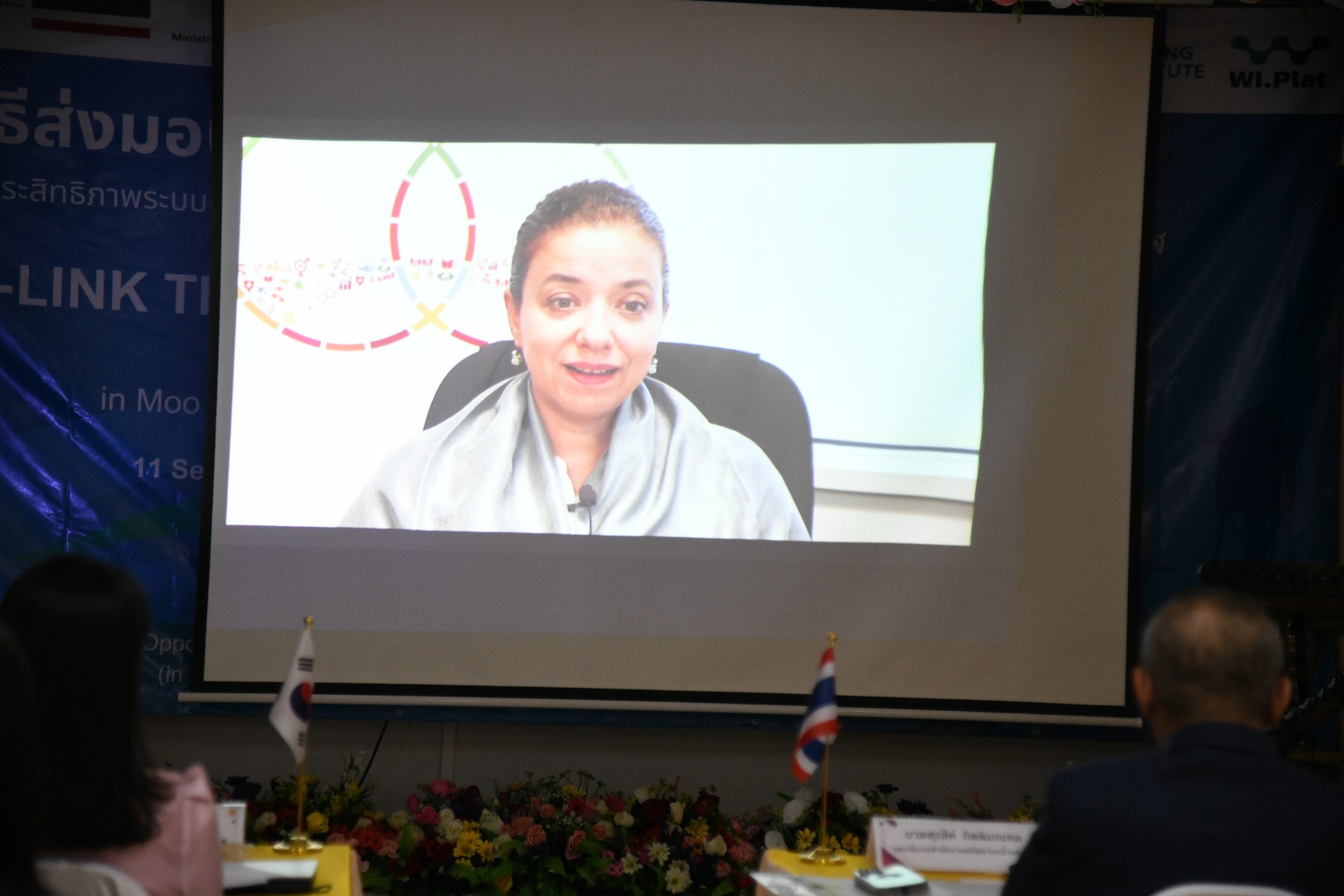
From the UN system, Ms. Dima Al-Khatib, Director of the UN Office for South-South Cooperation (UNOSSC), linked the pilot to the UN Day observance, “South-South and triangular cooperation are essential to tackling today’s crises and building inclusive, resilient, and sustainable societies. Across the Global South, countries are creatingbold, homegrown solutions and sharing them across borders.”
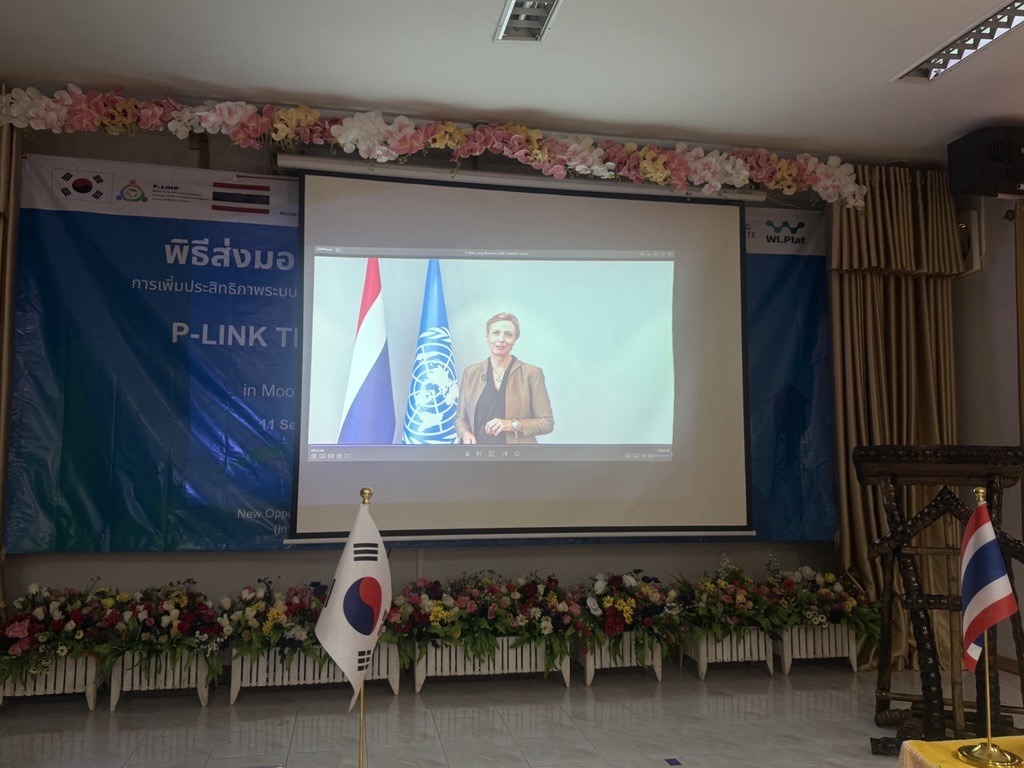
In her congratulatory remarks, Ms. Michaela Friberg-Storey, UN Resident Coordinator in Thailand, celebrated the partnership, “This project reflects Thailand’s leadership in harnessing innovation for sustainable development. The partnership between local communities, government, Mekong and Korean partners, and the United Nations shows how collective action delivers tangible benefits for people while strengthening regional resilience. The UN Country Team in Thailand stands ready to build on this collaboration and support Bung Khla’s intelligent water system into the future.”
South-South and Triangular Cooperation in Action
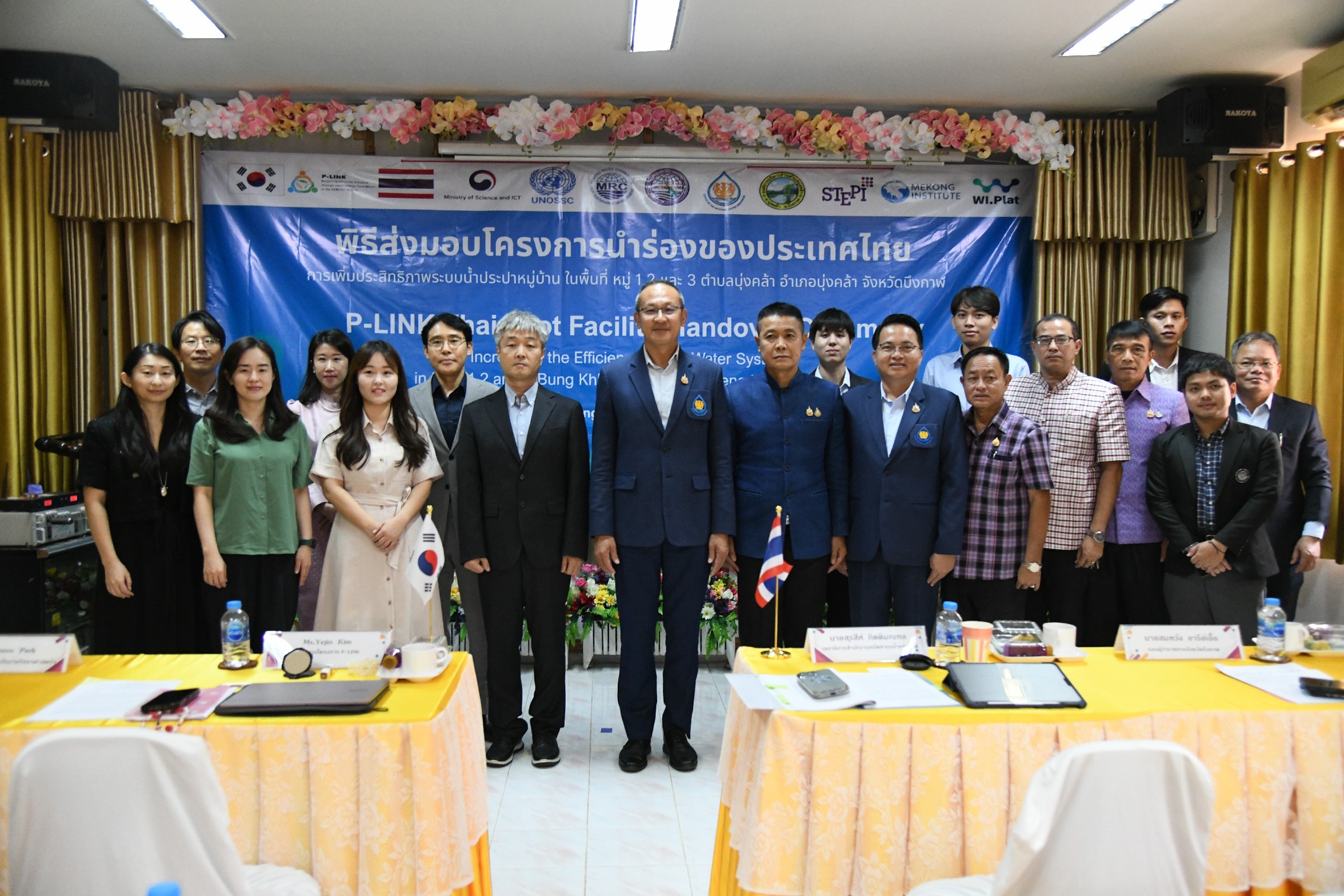
A South-South and Triangular Exchange dialogue, moderated by Ms. Yejin Kim, P-LINK Project Manager (UNOSSC), brought together panelists from Thailand, Viet Nam, the Mekong Institute, STEPI, and Wi.Plat to share reflections on scaling pilots across Cambodia, Lao PDR, and Viet Nam.
Dr. Winai Wangpimool, Director of Foreign Affairs, ONWR/TNMCS, stressed three key succes factors, “The careful choice of pilot site, the strong confidence of the community, and the close partnership of all stakeholders were the keys to success in Bung Khla. These are lessons other countries can draw upon as they implement their own pilots.”
From Viet Nam, Dr. Truong Hong Tien, Deputy Director-General of VNMC, congratulated Thailand’s progress but noted institutional hurdles:
“The Thai pilot is a real success. In Viet Nam, government restructuring and the need for additional ODA approval have delayed progress. Yet the intelligent water system applied in Bung Khla is exactly what many of our Mekong Delta communities need—around 20 percent still lack access to centralized water systems.”
Ms. Jian Wang, Program Manager at the Mekong Institute (MI), highlighted knowledge-sharing, “Bung Khla’s experience is not only a local success but also a regional asset. MI will invite the community and project team experts to our training programs so others can learn from this community-driven, tailored solution.”
Dr. Hwanil Park, Senior Research Fellow at STEPI, underlined the strength of triangular cooperation: “What made this pilot work were the right ingredients—local and national leadership, tailored solutions from providers like Wi.Plat, and the coordination of UNOSSC and all partners, rooted in solidarity and demand-driven cooperation. While the technical transfer is complete, the project team will continue engaging with Thai stakeholders to ensure sustainability and scalability.”
Mr. Sanghoon Cha, CEO of Wi.Plat, reflected on the company’s journey while linking it to broader challenges faced across the Global South: “This has been a big learning curve for us as a start-up. By doing, we have learned a lot. Wi.Plat is committed to continuing technical transfer and knowledge exchange as a partner to communities and governments.”
Key takeaways included:
- Community ownership is crucial – technology alone is not enough; sustainability depends on training and local leadership.
- Smart partnerships drive results – blending public leadership, private innovation, and regional knowledge exchange strengthens outcomes.
- Scalability is possible – Bung Khla’s model can be adapted to other communities, with Viet Nam highlighting strong potential for the Mekong Delta
Looking ahead, emphasized the need for national and provincial government support to advocate for the Water-Energy-Food (WEF) Nexus, mainstream the approach into policy, and facilitate interministerial coordination. They also called for regional dialogues and participatory planning to bring stakeholders together and ensure that innovation and community-driven models scale sustainably across the Mekong.
Inclusive Community Engagement
To inspire future leaders, children, youth, and community members took part in a drawing and multimedia contest, “How Technology and Innovation Changed My Community and Me: The Future I Long For.” Ahead of the competition, Bung Khla SAO introduced participants to the intelligent water system and explained its benefits for the community, sparking creativity and awareness among the younger generation.

The winning entries were celebrated during the handover ceremony, with colorful drawings and multimedia presentations showcasing how innovation is transforming daily life in Bung Khla. These stories of hope and imagination reinforced a powerful message: the next generation must be actively engaged in shaping sustainable, technology-driven solutions for their communities.
The Road Ahead
The handover marks not an end, but a beginning. As P-LINK moves toward completion in December 2025, Thailand’s smart water pilot now stands as a centre of excellence for the region. With strong local leadership, cross-border cooperation, and youth engagement, Bung Khla has become a beacon of how South-South and triangular cooperation can deliver real change at the community level.
“Today we celebrate not only a project, but a partnership,” concluded ONWR’s Secretary-General Dr. Surasri. “Together, we are building a more resilient Mekong—one smart tap at a time.” He reaffirmed Thailand’s commitment to sharing Bung Khla’s experience with other stakeholders and ensuring that it evolves into a centre of excellence for community-based intelligent water systems.
To find out more about the Thai pilot project watch the Video here: