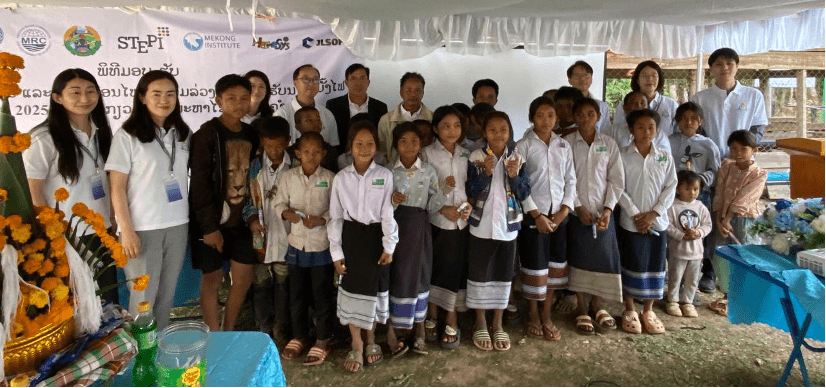
Nakio Village, Mahaxay District (27 November 2025) — Lao PDR marked an important milestone in strengthening climate resilience and community safety with the official handover of the P-LINK Lao pilot facilities and the completion of a comprehensive capacity-building programme. The initiative is part of P-LINK (People’s Livelihood Initiative through water-energy-food Nexus in the meKong), also known as the RoK–UNOSSC Facility (Phase 3) — is supported by the Government of the Republic of Korea through its Ministry of Science and ICT.
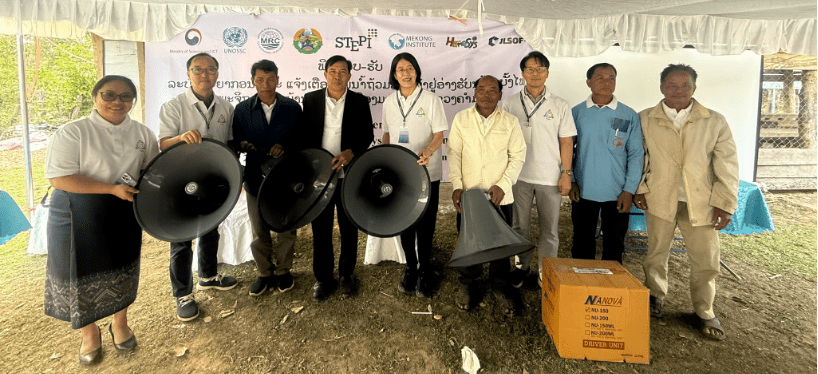
The ceremony brought together district authorities, national water agencies, village leaders, youth, NT2 hydropower representatives, and the project implementing partners—the Mekong Institute, Mekong River Commission Secretariat, Science and Technology Policy Institute, and UNOSSC—to inaugurate a tailored AI-based Flood Forecasting and Warning System (FFWS). The system, the first of its kind in Nakio Village, includes solar-powered hydrological stations, automated siren towers, and multi-channel early-warning alerts delivered through SMS and other communication tools.
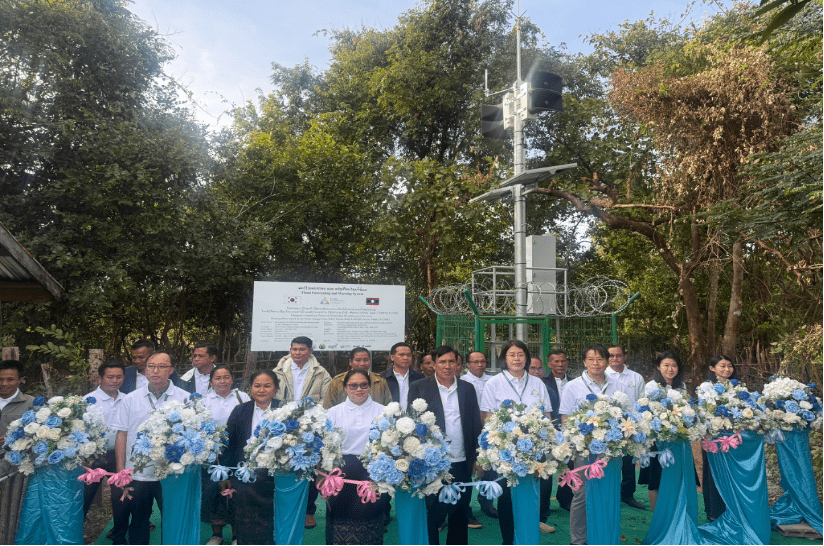
Local and National Leadership Welcome the Innovation

Opening the ceremony, Mr. Sengchanh Samontri, Chief of the Administration Committee of Mahaxay District, highlighted
the significance of the pilot: For the first time, our community has a tool that gives us time—a chance to protect our families, livestock, and fields. We thank the Republic of Korea and P-LINK for bringing this innovation to Mahaxay. We are proud of this system and will take responsibility for its long-term operation and care
 Mrs. Soudavee Keopaseuth, Deputy Secretary-General of the Lao National Mekong Committee Secretariat, emphasized the broader national value: The Lao pilot shows how national water-data improvements and community-level action can work hand in hand. This system reflects our commitment to using science, technology, and partnership to protect vulnerable communities and build long-term resilience.
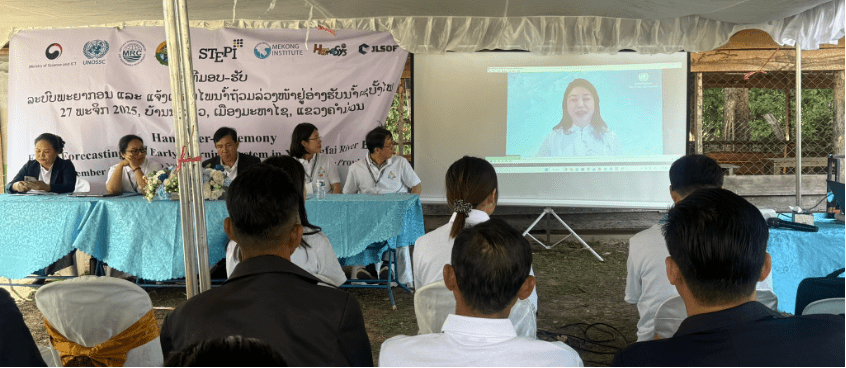
In her congratulatory remarks, Ms. Xiaojun Grace Wang, Director of the UNOSSC Trust Fund, noted that the system represents more than a technical installation:
This is a moment where knowledge becomes capacity, and where a pilot becomes a pathway to resilience. The Lao pilot weaves together national planning and community needs—linking data systems in Vientiane with real-time alerts in Nakio. This is South–South and triangular cooperation in action.
She praised Nakio residents for their proactive engagement, underscoring that they “did not just receive this system—they shaped it, adapted it, and made it their own.”
ROK Reaffirms Commitment to STI-Driven Resilience
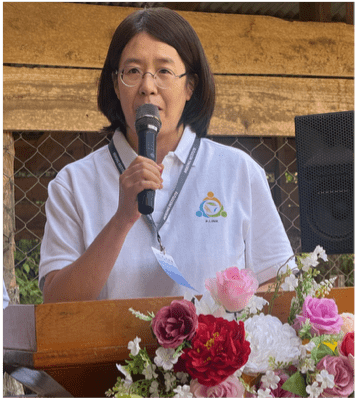
Representing STEPI, Dr. Myong Hwa Lee, Director, Directorate for Global Strategy highlighted Korea’s commitment to supporting evidence-based water governance and STI-driven innovation in Lao PDR as well as across the Mekong.
Today is not the close of a project—it is the beginning of a stronger, safer future. The achievements here show what becomes possible when national vision, local leadership, and partnership come together.
Dr. Lee noted that the pilot complements the broader Improvement Plan for the National Water Resources Data Management Center (NWRDMC)—helping connect national forecasting capabilities with practical early warning tools at the village level.
Hands-On Training: From Understanding Risk to Operating the System
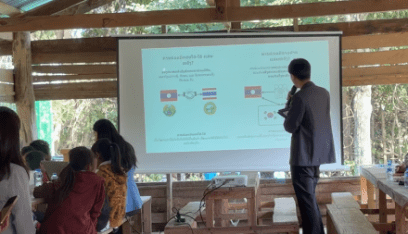
Ahead of the handover, villagers, youth volunteers, district officers, and provincial technicians completed a multi-stage capacity-building programme led by the Mekong Institute and ROK technical solution consortium (Hermesys and JL Soft). Training materials, designed using simple Lao-language explanations and visual step-by-step guidance, covered:
- Introduction to P-LINK and principles of South–South and triangular cooperation
- Understanding floods and why early warning matters
- How the FFWS works, including Ai-based prediction, sensor functions, and alert mechanisms
- What to do when alarms sound, and safe evacuation procedures
- Basic O&M tasks, including reporting equipment issues and assigning roles to households, schools, and village authorities.
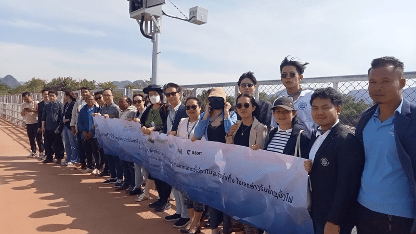
Training combined classroom learning with field demonstrations at the hydrological stations, hands-on use of system interfaces, and a scenario-based evacuation drill. Participants also completed evaluation forms to capture learning outcomes and recommendations for future training.
A Community Ready for the Future
With the new system in place, Nakio Village now has access to earlier, more reliable flood alerts—giving families critical time to protect homes, fields, and livestock. The pilot demonstrates how tailored STI solutions, strengthened by local ownership, can transform risk preparedness in vulnerable river basins such as the Xebangfai.
The lessons from Nakio Village will guide future expansion across the Mekong region, reinforcing P-LINK’s mission to advance people-centred, climate-resilient development through the Water–Energy–Food Nexus. Although the facility has now been handed over, the project team will continue supporting Nakio through ongoing training and hands-on O&M guidance, ensuring the community gains confidence in operating the system. These efforts will help document good practices and position Nakio as an emerging centre of excellence for local resilience.